Marsannay
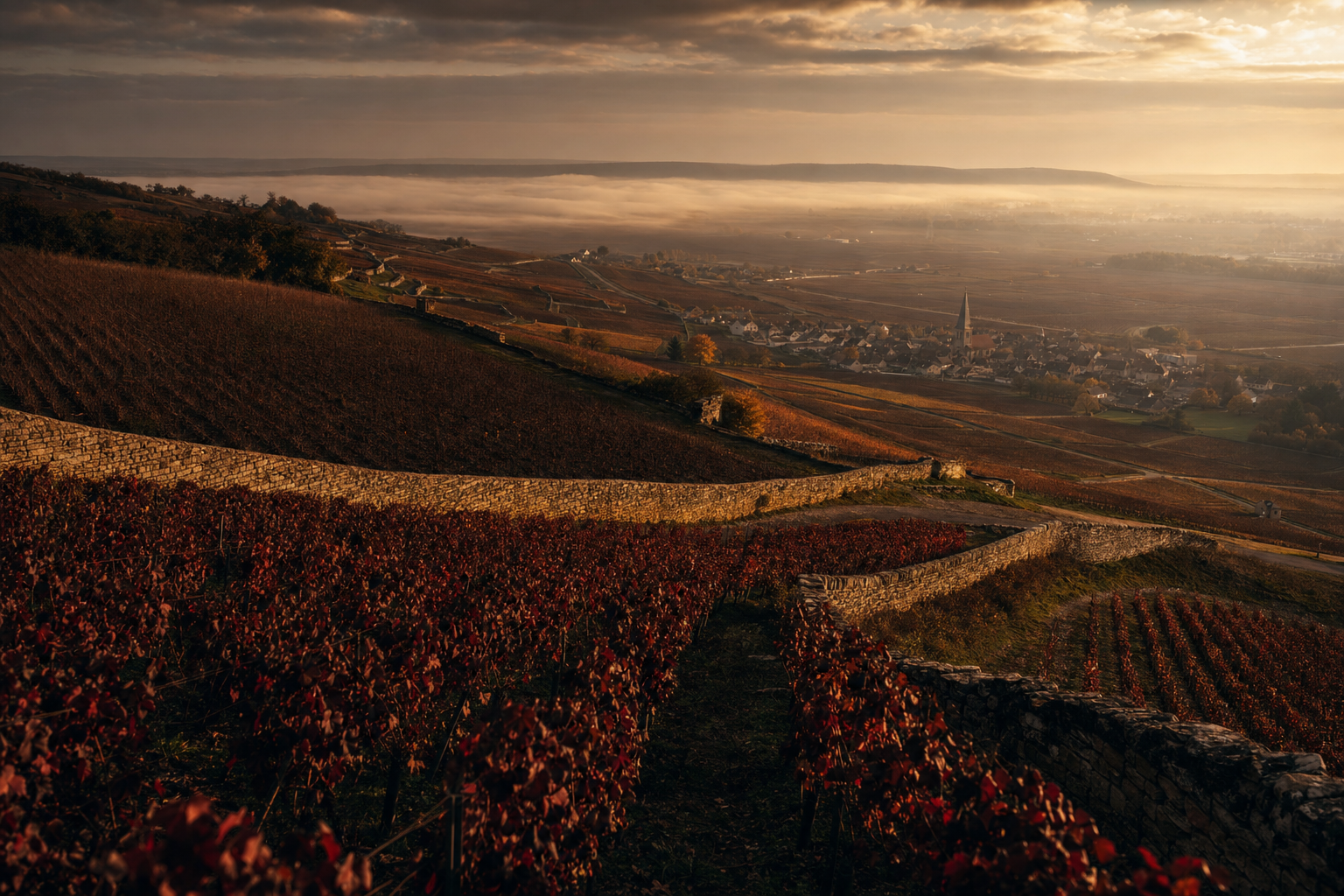
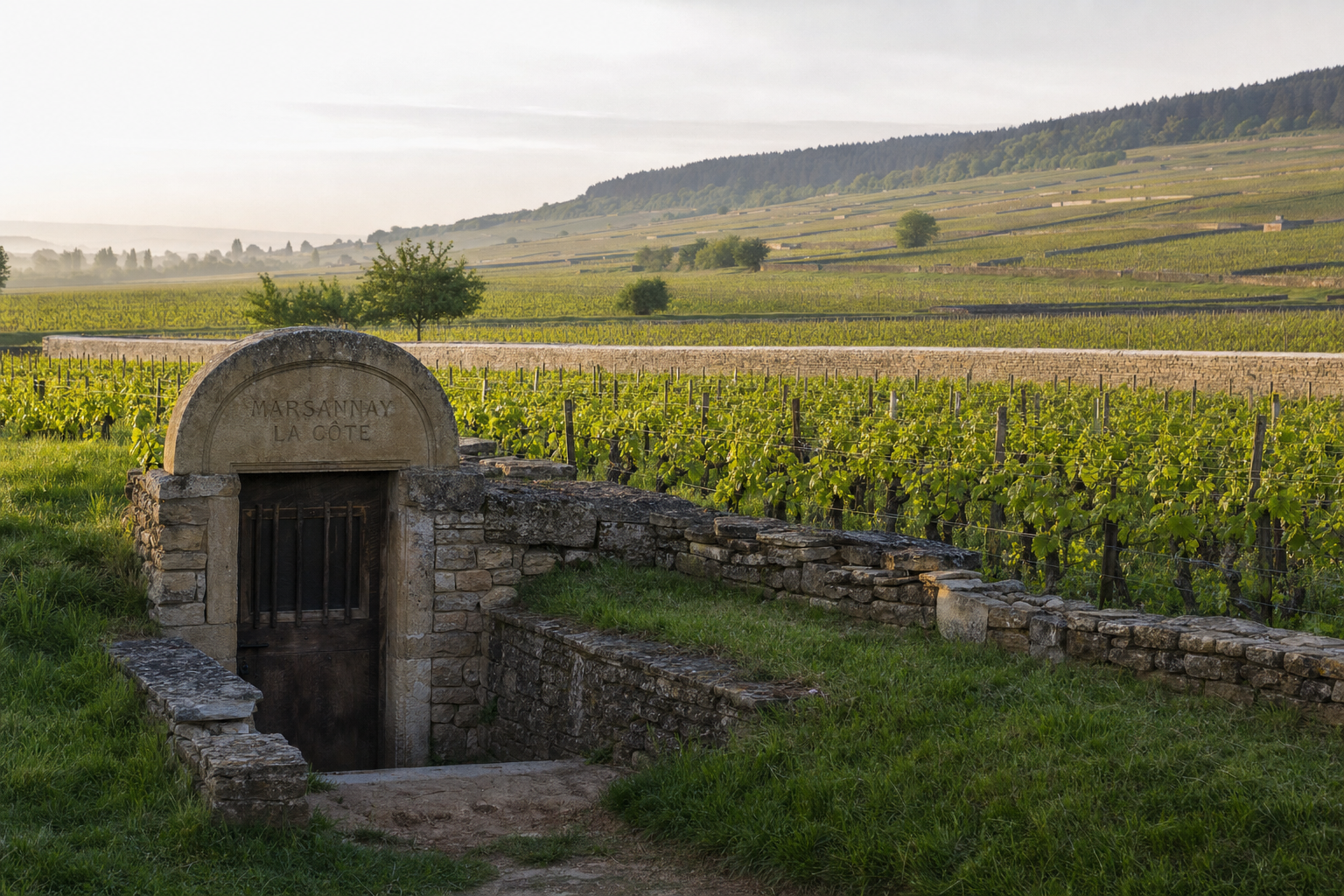
The northernmost appellation of the Côte de Nuits, Marsannay is the only village in the entire region authorized to produce rosé under its own AOC name. Established as a village appellation only in 1987 — remarkably recent — it occupies the transitional zone between Dijon's suburbs and the limestone escarpment of the Côte proper. The terrain is flatter, the soils deeper and more alluvial than those to the south, producing wines that trade Grand Cru muscle for freshness, charm, and everyday accessibility.
Tasting Profile
Soils & Geology
Premier Crus
Marsannay has no officially classified Premier Crus. An ongoing reclassification campaign by local growers (led by Domaine Sylvain Pataille and others) has proposed 33 lieux-dits for Premier Cru elevation, submitted to INAO in 2017. A decision is still pending as of 2026. The most frequently cited candidate sites include:
- Clos du Roy
- Les Longeroies
- Les Favières
- En Montchenevoy
- Les Grasses Têtes
- Champs Salomon
- La Charme aux Prêtres
- Les Saint-Jacques
Producers to Know
- Domaine Huguenot
- Domaine Galeyrand
- Domaine Fougeray de Beauclair
- Domaine Sylvain Pataille
- Bruno Clair
"You can smell a great Marsannay before you see it — fresh red fruit that cuts through any room."
Fixin
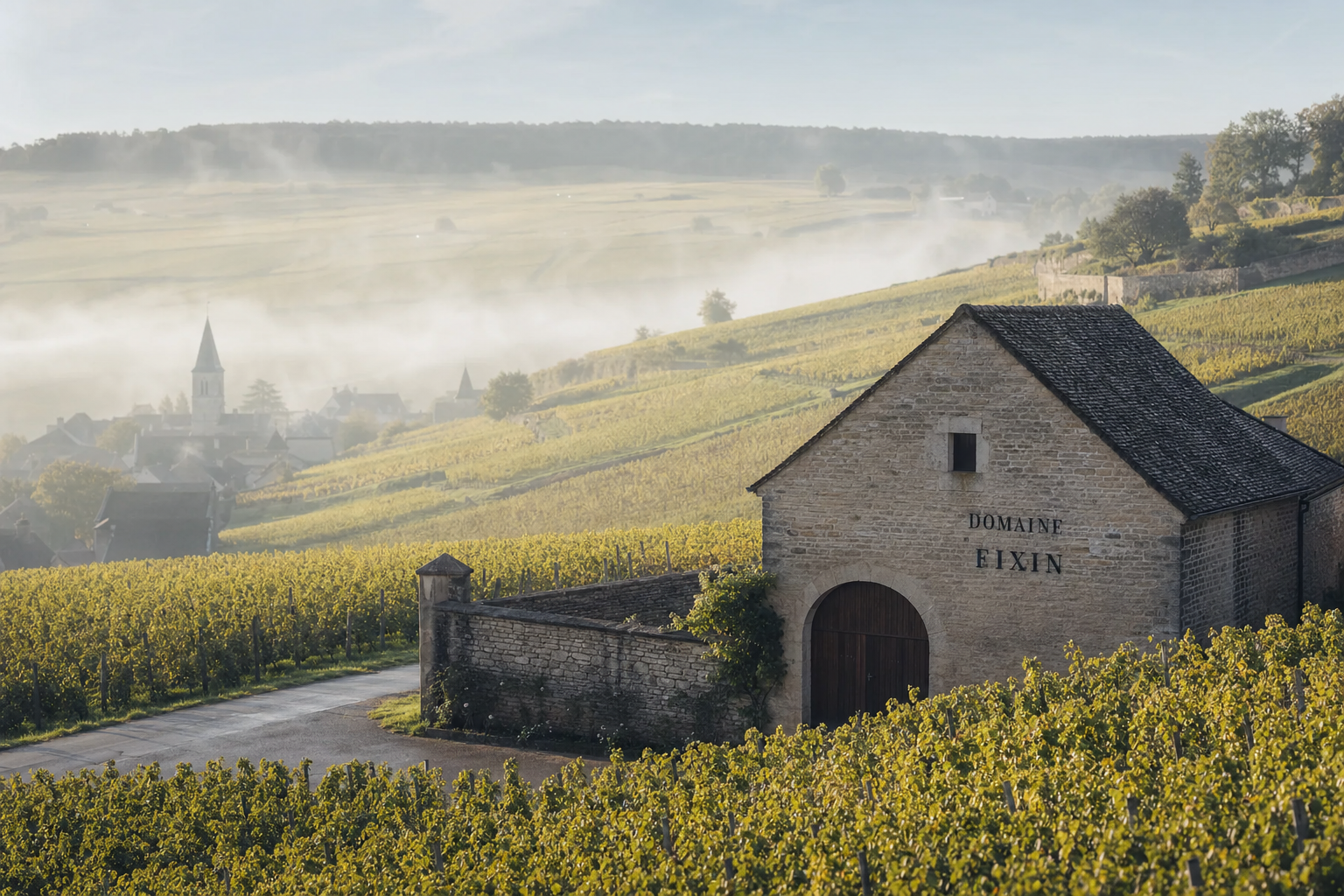
Fixin is the Côte de Nuits's best-kept secret. Wedged between Marsannay and Gevrey-Chambertin, it produces structured, serious wines that critics and collectors routinely underestimate — which keeps prices sane. The Bajocian limestone bedrock here sits closer to the surface than in Marsannay, lending wines a distinctive earthy, iron-laced backbone. Clos Napoléon, a monopole with historical ties to the Napoleonic era, is the village's most celebrated climat and one of Burgundy's most compelling value propositions.
Tasting Profile
Soils & Geology
Premier Crus (6 Premiers Crus Climats)
- Clos Napoléon monopole — Joliet
- Les Hervelets
- Les Arvelets
- Le Meix-Bas
- Les Peulots
- Clos du Chapitre
- La Perrière
- Clos de la Perrière
- En Suchot
- Le Village
- Aux Cheusots
- Queue de Hareng (Brochon)
Producers to Know
- Domaine Joliet (Clos Napoléon monopole)
- Domaine Faiveley
- Philippe Rossignol
- Vincent & Denis Berthaut
Gevrey-Chambertin
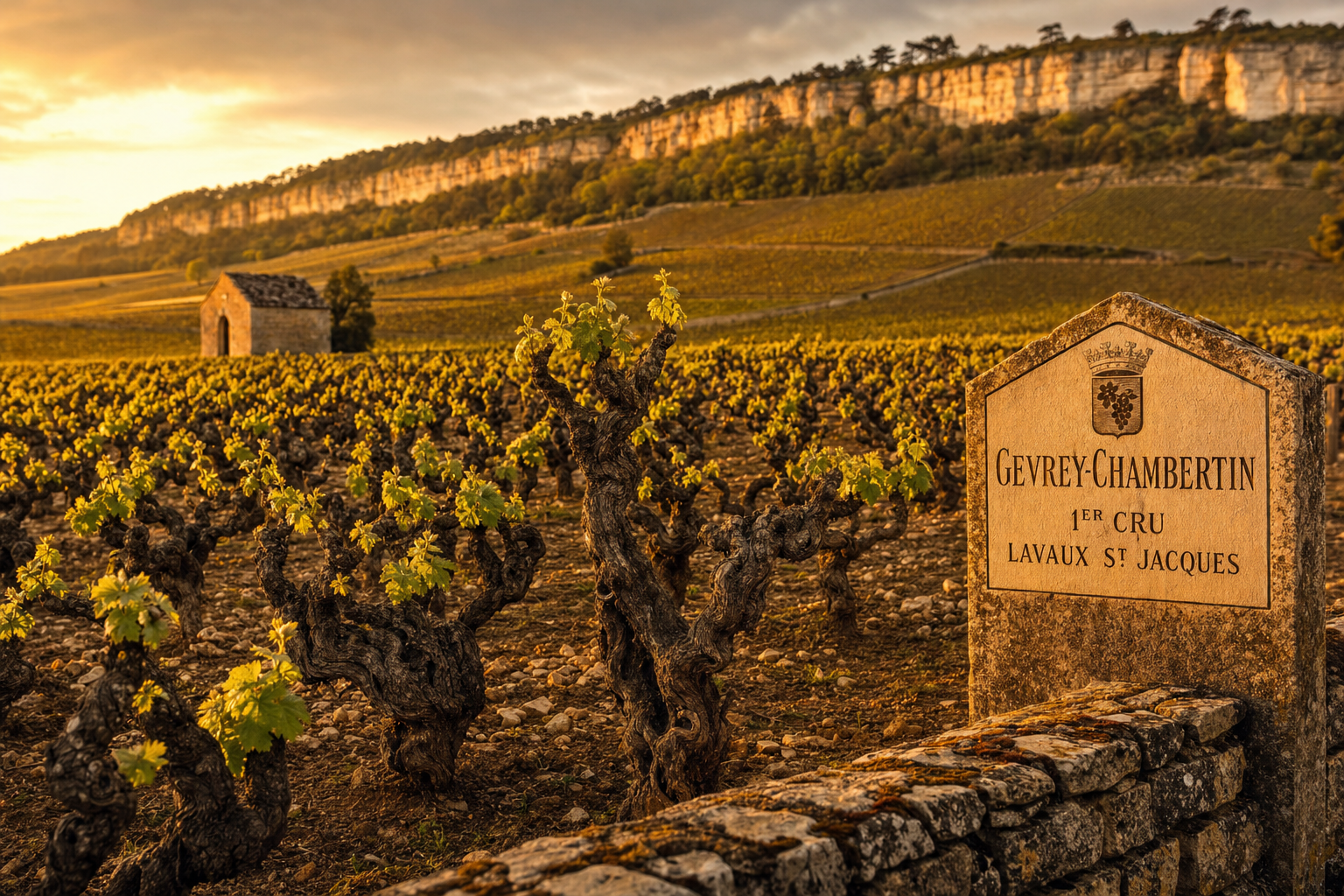
This is the most muscular, the most structured, and arguably the most famous village on the Côte de Nuits. Chambertin itself — Napoleon's alleged daily wine — is the archetype of power Pinot Noir: iron, dark cherry, truffle, and an architecture of tannin designed to outlive most of us. With nine Grand Crus fanning out from the village, Gevrey encompasses more top-tier terroir than any other commune on the slope. The hillside soils of Bathonian and Bajocian limestone give way to deeper clay-rich soils lower on the slope, producing wines with extraordinary density and the capacity to age 20–40 years.
Tasting Profile
Soils & Geology
Grand Crus (9 Grands Crus)
- Chambertin
- Chambertin-Clos de Bèze
- Chapelle-Chambertin
- Charmes-Chambertin
- Griotte-Chambertin
- Latricières-Chambertin
- Mazis-Chambertin
- Mazoyères-Chambertin
- Ruchottes-Chambertin
Premier Crus (26 Premiers Crus Climats)
- Clos Saint-Jacques ★ de facto GC quality
- Les Cazetiers
- Lavaux Saint-Jacques
- Estournelles Saint-Jacques
- Combe au Moine
- Les Champeaux
- Les Goulots
- Petits Cazetiers
- La Bossière
- La Romanée
- Poissenot
- Clos des Varoilles
- Clos du Chapitre
- Fonteny
- Les Corbeaux
- Champonnet
- Craipillot
- Cherbaudes
- Clos Prieur
- La Perrière
- Au Closeau
- Issarts
- Aux Combottes
- Bel Air
- Petite Chapelle
- En Ergot
Top Producers
- Domaine Armand Rousseau
- Domaine Denis Mortet
- Domaine Rossignol-Trapet
- Domaine Dugat-Py
- Domaine Claude Dugat
- Domaine Thomas Quivy
"The most immediately identifiable wine on the Côte — unmistakably powerful, iron-laced, built like a cathedral."
Morey-Saint-Denis
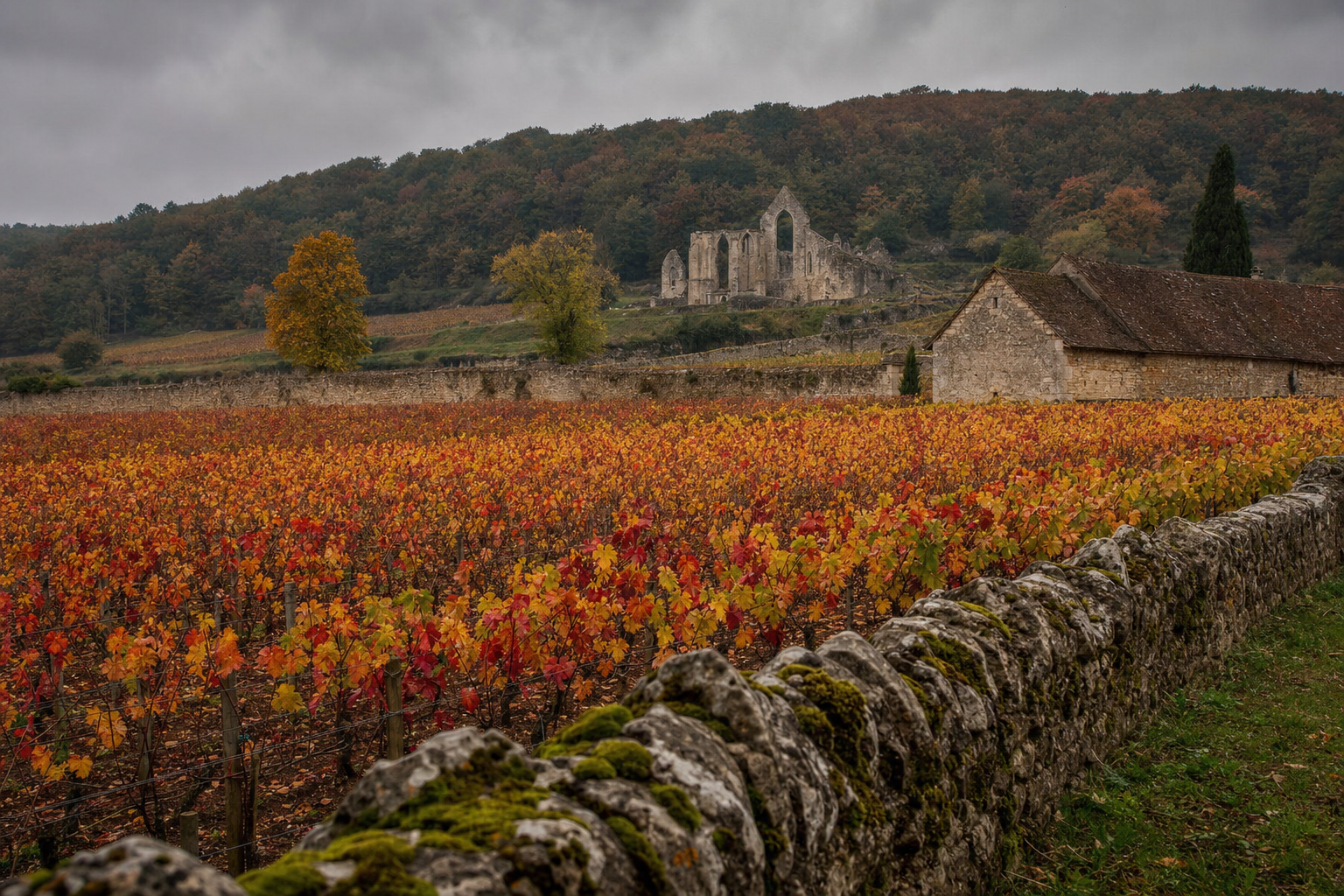
The perpetually undervalued village between Gevrey and Chambolle, Morey-Saint-Denis has never quite commanded the prices its terroir deserves — which makes it one of Burgundy's smartest purchases. Its Grand Crus represent a middle path: richer and denser than Chambolle, more perfumed and silky than Gevrey. Clos de la Roche, the village's largest Grand Cru, is among the most intellectually complex wines on the slope — earthy, structured, and capable of extraordinary longevity. Clos de Tart, now under Pinault family ownership, has emerged as one of Burgundy's most exciting ongoing projects.
Tasting Profile
Soils & Geology
Grand Crus (5 Grands Crus)
- Clos de la Roche
- Clos Saint-Denis
- Clos de Tart monopole — Artémis Domaines
- Clos des Lambrays monopole
- Bonnes-Mares (part)
Premier Crus (20 Premiers Crus Climats)
- Les Génavières
- Monts Luisants
- Les Chaffots
- Clos Baulet
- Les Blanchards
- Les Gruenchers
- La Riotte
- Les Millandes
- Les Façonnières
- Les Charrières
- Clos des Ormes
- Aux Charmes
- Aux Cheseaux
- Les Chenevery
- Le Village
- Les Sorbès
- Clos Sorbè
- La Bussière
- Les Ruchots
- Côte Rôtie
Top Producers
- Domaine Dujac
- Domaine Ponsot
- Domaine Stéphane Magnien
- Clos des Lambrays
- Clos de Tart
Chambolle-Musigny
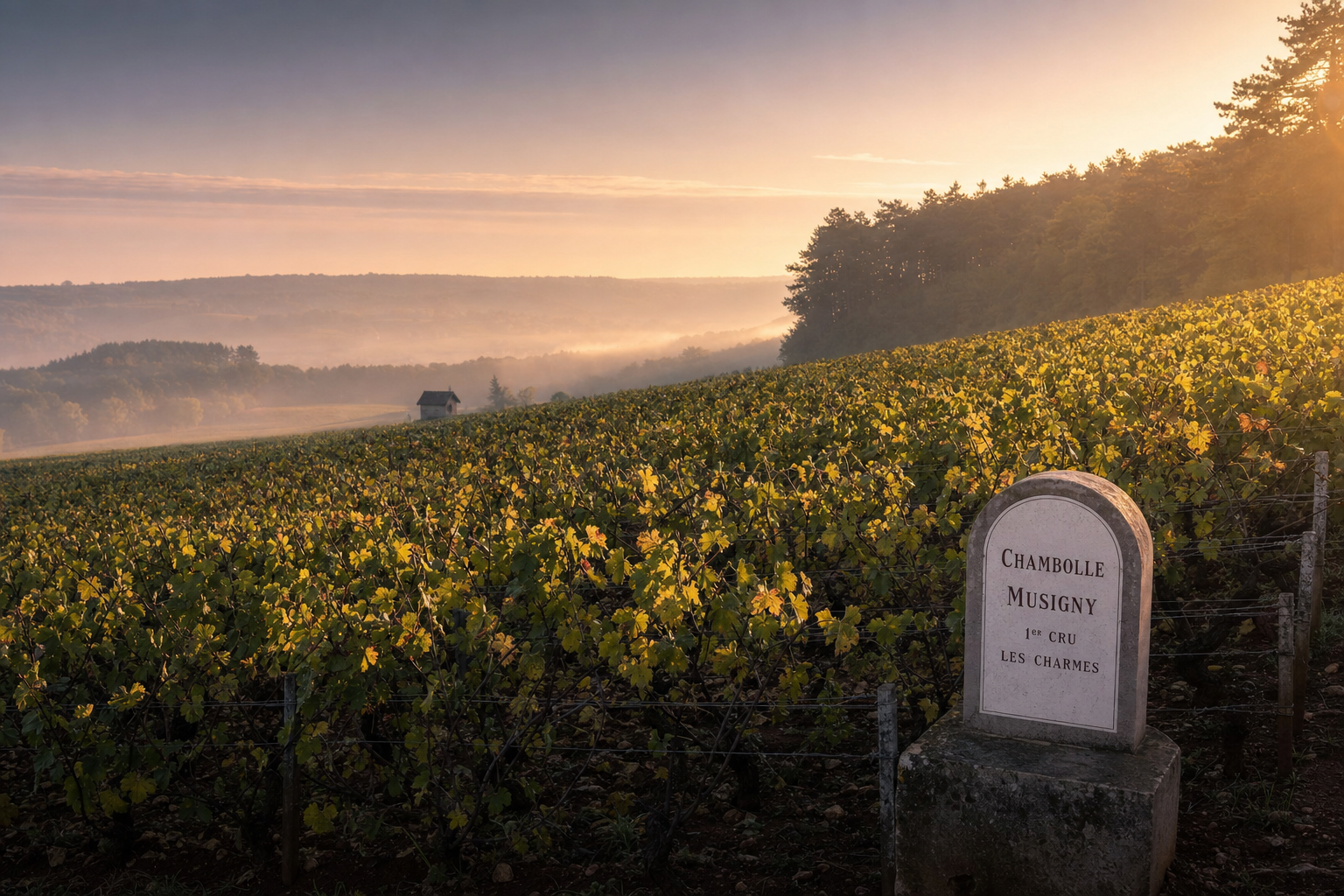
"The most exquisite expression of Pinot Noir on the planet." Clive Coates MW's assessment of Musigny captures what makes Chambolle so singular. Where Gevrey is power and Morey is structure, Chambolle is pure perfume: violet, rose petal, wild strawberry, and an almost eerie silkiness on the palate that defies the usual trade-off between elegance and depth. The chalky Oxfordian marl soils — pale, fine, and calcium-rich — strip away tannin and add a gossamer quality found nowhere else on the Côte. Les Amoureuses, a Premier Cru, routinely commands Grand Cru prices at auction.
Tasting Profile
Soils & Geology
Grand Crus (2 Grands Crus)
- Musigny
- Bonnes-Mares (part)
Premier Crus (25 Premiers Crus Climats)
- Les Amoureuses ★ commands GC prices
- Les Charmes
- Les Fuées
- Les Véroilles
- Les Sentiers
- Les Baudes
- Les Noirots
- Les Lavrottes
- Les Grands Murs
- Aux Beaux Bruns
- Aux Échanges
- Les Plantes
- Aux Combottes
- Derrière la Grange
- Les Gruenchers
- Les Groseilles
- Les Combottes
- Les Feusselottes
- Les Chatelots
- Les Cras
- Les Carrières
- Les Chabiots
- Les Borniques
- Les Hauts Doix
- La Combe d’Orveau
Top Producers
- Domaine Comte de Vogüé
- Domaine Georges Roumier
- Domaine Jacques-Frédéric Mugnier
- Domaine Amiot-Servelle
- Domaine Ghislaine Barthod
"Musigny is the wine that makes you rethink everything you thought you knew about red wine."
Vougeot
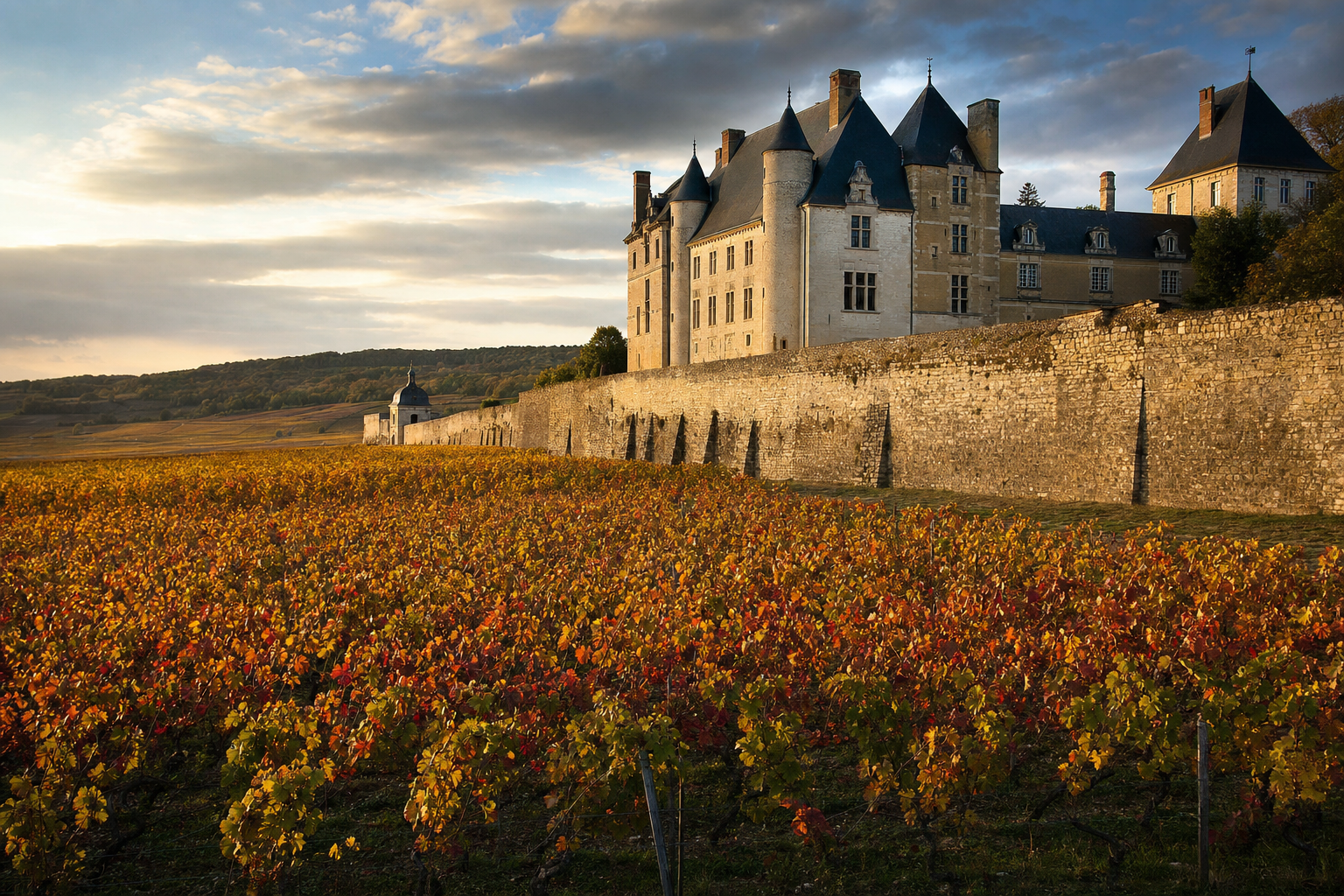
Vougeot is defined almost entirely by the Clos de Vougeot, the historic 50-hectare walled Grand Cru founded by Cistercian monks in the 12th century. The sheer scale of the Clos — and its fragmentation among more than 80 different owners — means quality varies enormously across the appellation. Top-slope Vougeot near the forest can rival the finest Chambolle; low-slope parcels near the Route Nationale are flatter and less interesting. Knowing the producer is more critical here than anywhere else on the Côte. The Château du Clos de Vougeot itself, now owned by the Confrérie des Chevaliers du Tastevin, is one of Burgundy's most iconic monuments.
Tasting Profile
Soils & Geology
Grand Cru (1 Grand Cru)
- Clos de Vougeot 50 ha — 80+ owners
Premier Crus (4 Premiers Crus Climats)
- Les Crâs
- Le Clos Blanc
- Les Petits Vougeots
- Clos de la Perrière
Key Producers (top-parcel holders)
- Domaine Leroy
- Domaine Méo-Camuzet
- Domaine Anne Gros
- Domaine Drouhin-Laroze
- Château de la Tour (largest single holder)
Flagey-Échézeaux
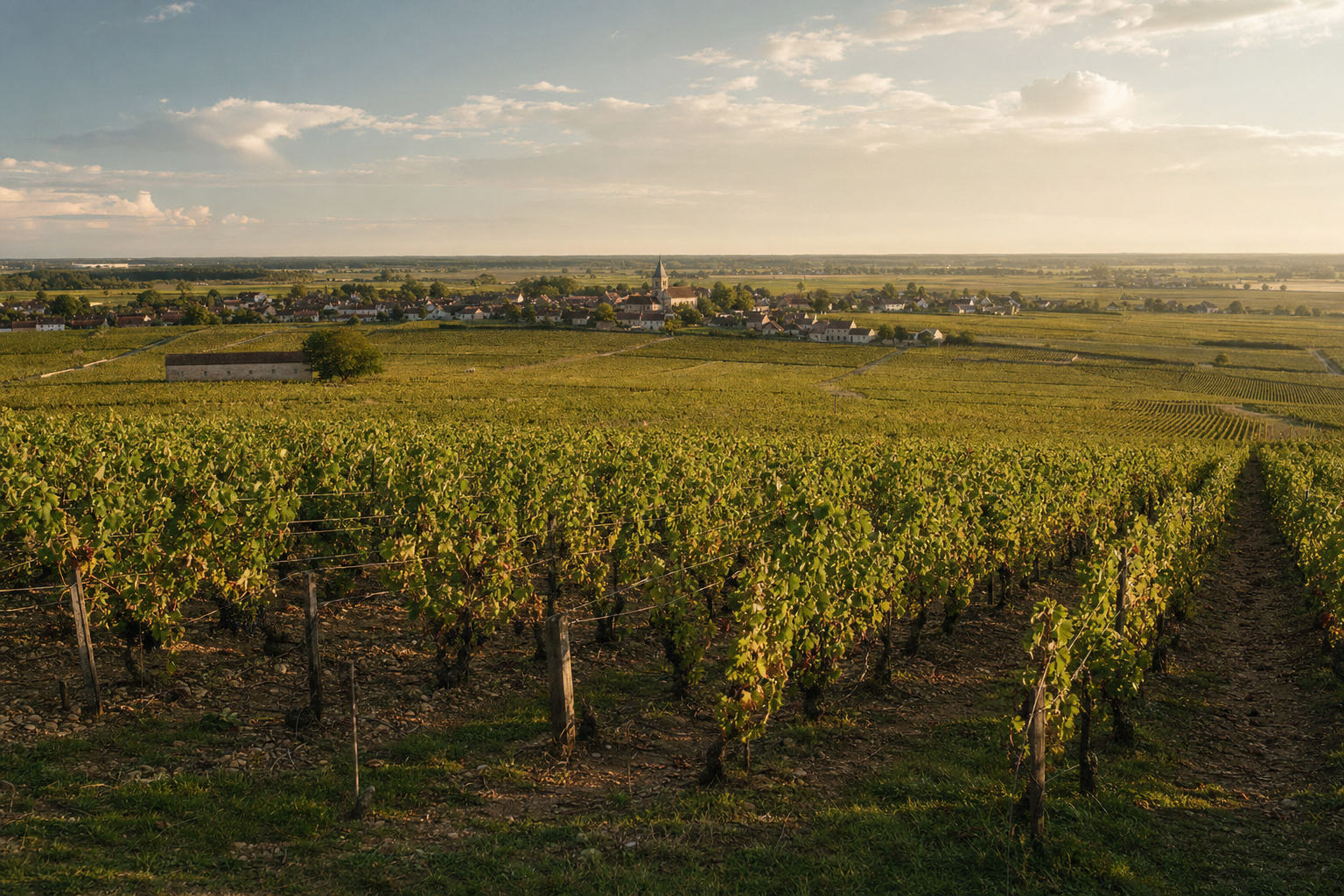
Flagey-Échézeaux is a curiosity of Burgundian geography: the village produces Grand Cru wines under their own names (Échézeaux and Grands Échézeaux) but all village and Premier Cru level wines are sold under the Vosne-Romanée appellation. The village itself sits in the flatlands east of the main slope, while its Grand Cru parcels occupy the hillside between Clos de Vougeot and Vosne-Romanée. Grands Échézeaux, in particular, is one of the Côte's most undervalued Grand Crus — offering Vosne-like complexity at a fraction of La Tâche or Romanée-Conti pricing.
Tasting Profile — Grands Échézeaux
Soils & Geology
Grand Crus (2 Grands Crus)
- Grands Échézeaux ★ undervalued
- Échézeaux
Premier Crus (3 Premiers Crus Climats — sold as Vosne-Romanée)
- Les Beaux Monts (Flagey portion)
- Les Rouges
- En Orveaux
Village and Premier Cru wines from Flagey-Échézeaux are sold under the Vosne-Romanée appellation rather than under the Flagey name.
Top Producers
- Domaine de la Romanée-Conti
- Domaine René Engel
- Domaine Mugneret-Gibourg
- Domaine du Comte Liger-Belair
Vosne-Romanée
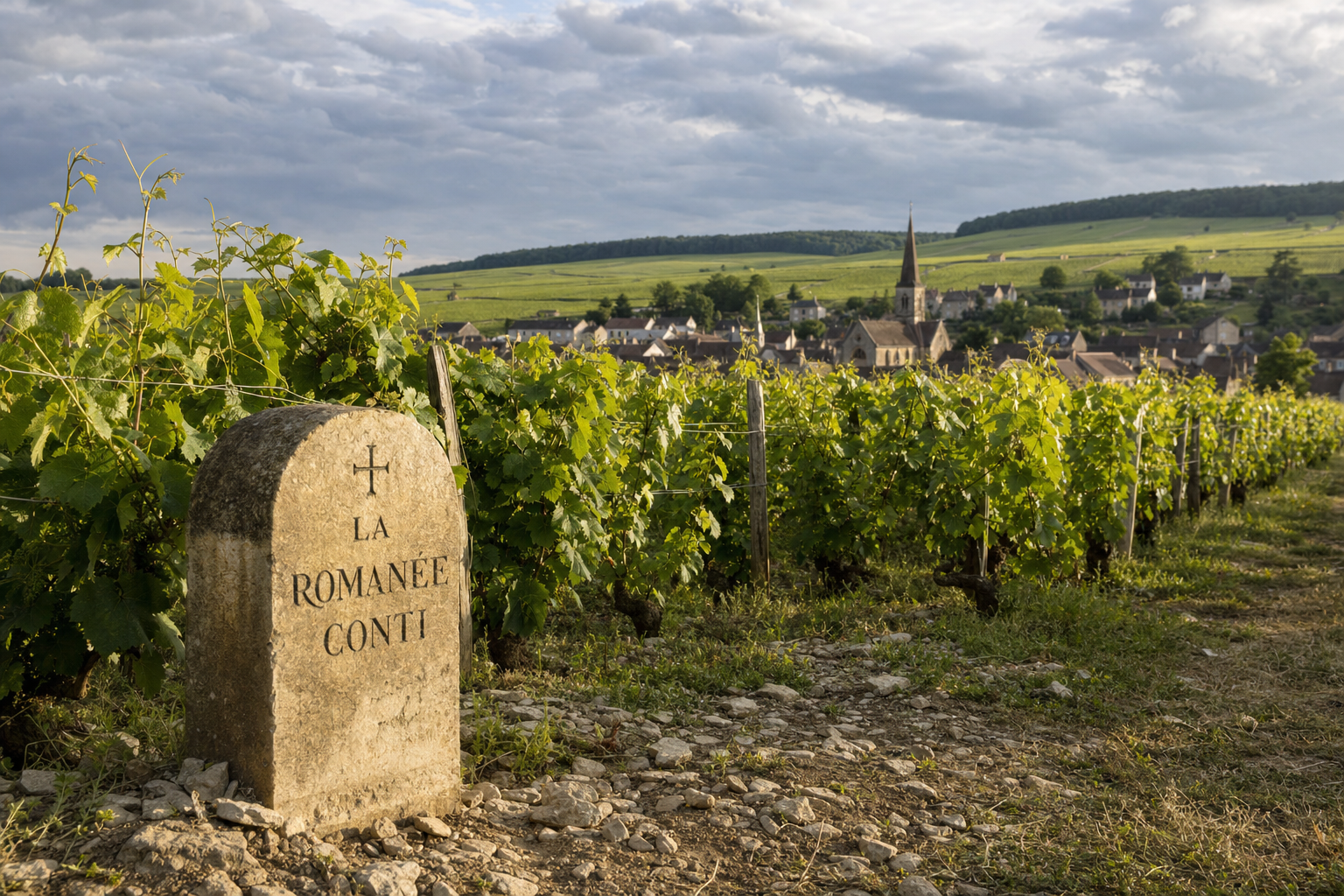
There is no more sacred ground in the wine world. Vosne-Romanée is home to Romanée-Conti, La Tâche, Richebourg, Romanée-Saint-Vivant, La Romanée, and La Grande Rue — a concentration of Grand Crus without parallel anywhere on earth. The village sits at the absolute sweet spot of the Côte de Nuits: a gentle east-facing slope of Comblanchien and Premeaux limestone at precisely the right elevation, aspect, and depth to produce Pinot Noir of unimaginable complexity, perfume, and longevity. Domaine de la Romanée-Conti holds the monopole on both Romanée-Conti and La Tâche — the two most coveted and expensive wines in the world.
Tasting Profile
Soils & Geology
Grand Crus (6 Grands Crus)
- Romanée-Conti DRC monopole
- La Tâche DRC monopole
- Richebourg
- Romanée-Saint-Vivant
- La Romanée Liger-Belair monopole
- La Grande Rue Lamarche monopole
Premier Crus (14 Premiers Crus Climats)
- Les Suchots ★ neighbours Richebourg
- Aux Malconsorts ★ near La Tâche
- Cros Parantoux ★ Henri Jayer legend
- Les Beaux Monts
- Aux Brûlées
- Les Chaumes
- Les Gaudichots
- La Croix Rameau
- Clos des Réas
- Aux Raignots
- Les Petits Monts
- Au-dessus des Malconsorts
- Les Beaux Monts (Flagey portion)
- En Orveaux (Flagey portion)
Top Producers
- Domaine de la Romanée-Conti
- Domaine Leroy
- Domaine Méo-Camuzet
- Domaine du Comte Liger-Belair
- Domaine Jean Grivot
- Domaine Emmanuel Rouget
"To drink a great Vosne is not to taste a wine. It is to experience a place — and a kind of silence."
Nuits-Saint-Georges
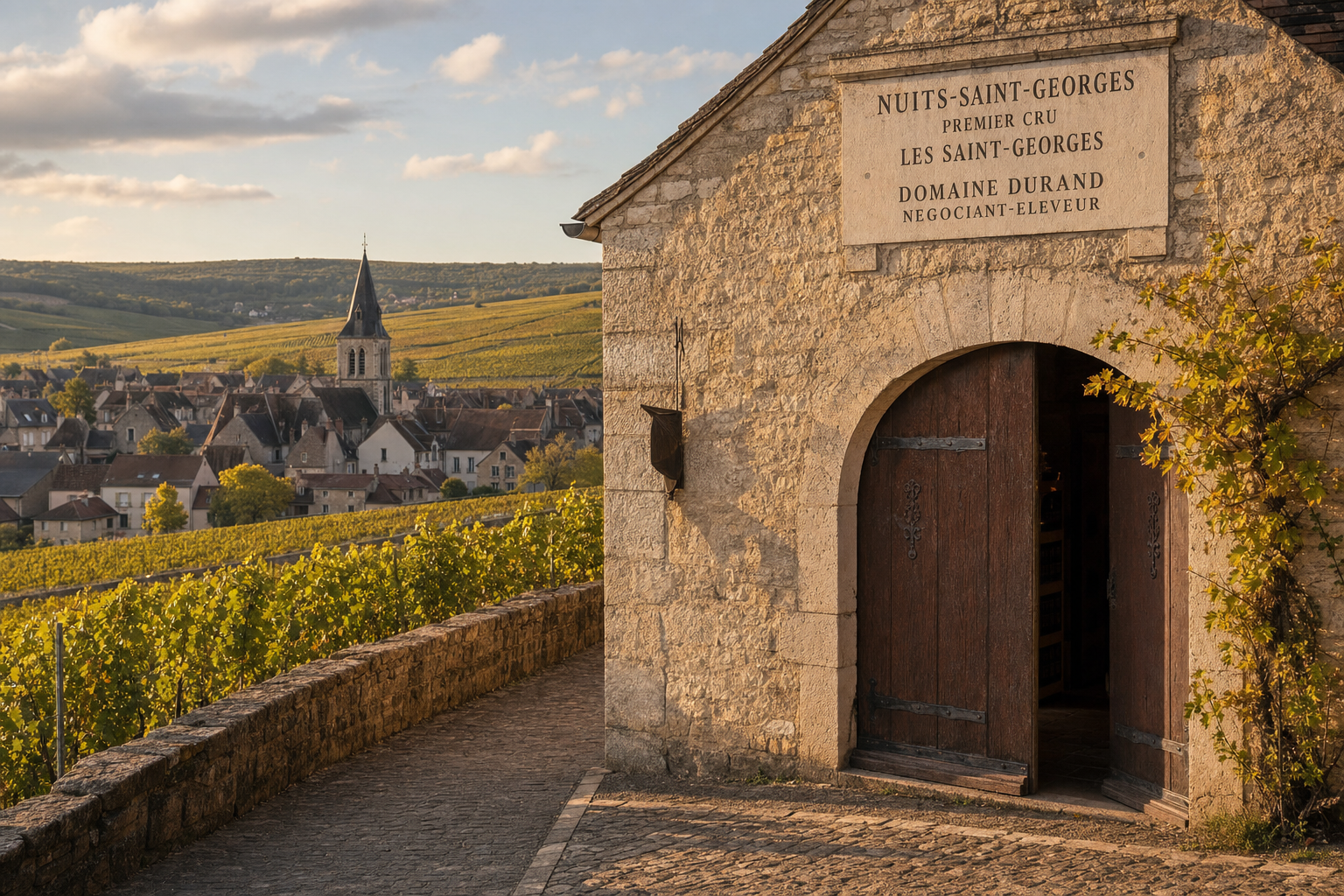
The commercial capital of the Côte de Nuits has never received a Grand Cru — a historical injustice that generations of producers have quietly turned to their advantage. With 41 Premier Crus, Nuits-Saint-Georges offers an unrivalled diversity of styles and terroirs within a single appellation. The wines of the northern end (near Vosne) share that village's perfume and silkiness; those of the south (near Premeaux-Prissey) take on the stony, austere character of Premeaux limestone — fuller in body, more tannic, and built to age. Robert Chevillon's range of Premiers Crus is among the most compelling educational lineups in Burgundy.
Tasting Profile
Soils & Geology
Premier Crus (41 Premiers Crus Climats)
Nuits-Saint-Georges commune
- Les Saint-Georges ★ best climat
- Les Vaucrains ★
- Les Cailles ★
- Les Pruliers
- Les Hauts Pruliers
- Les Porrets-Saint-Georges
- Clos des Porrets-Saint-Georges
- Aux Boudots
- Aux Murgers
- Aux Chaignots
- Aux Cras
- Aux Bousselots
- Aux Thorey
- Aux Vignerondes
- Aux Champs Perdrix
- Aux Argillas
- La Richemone
- Les Damodes
- Les Perrières
- Les Poulettes
- Les Chaboeufs
- Les Vallerots
- Ronciere
- Rue de Chaux
- Les Crots
- Les Procès
- Château Gris
- En la Perrière Noblot
- Chaînes Carteaux
Prémeaux-Prissey commune
- Clos de la Maréchale ★ Mugnier monopole
- Clos Arlot
- Les Didiers
- Les Terres Blanches
- Clos des Forêts Saint-Georges
- Aux Perdrix
- Clos des Corvées
- Clos des Corvées Pagets
- Clos Saint-Marc
- Les Argillières
- Clos des Argillières
- Clos des Grandes Vignes
Top Producers
- Domaine Robert Chevillon
- Domaine David Duband
- Domaine Henri Gouges
- Domaine Faiveley
- Domaine de l'Arlot
"The great oversight of the appellation system — no Grand Cru, but more Premier Cru character than any village on the Côte."