A Burgundy appellation guide
Chablis, Climat by Climat
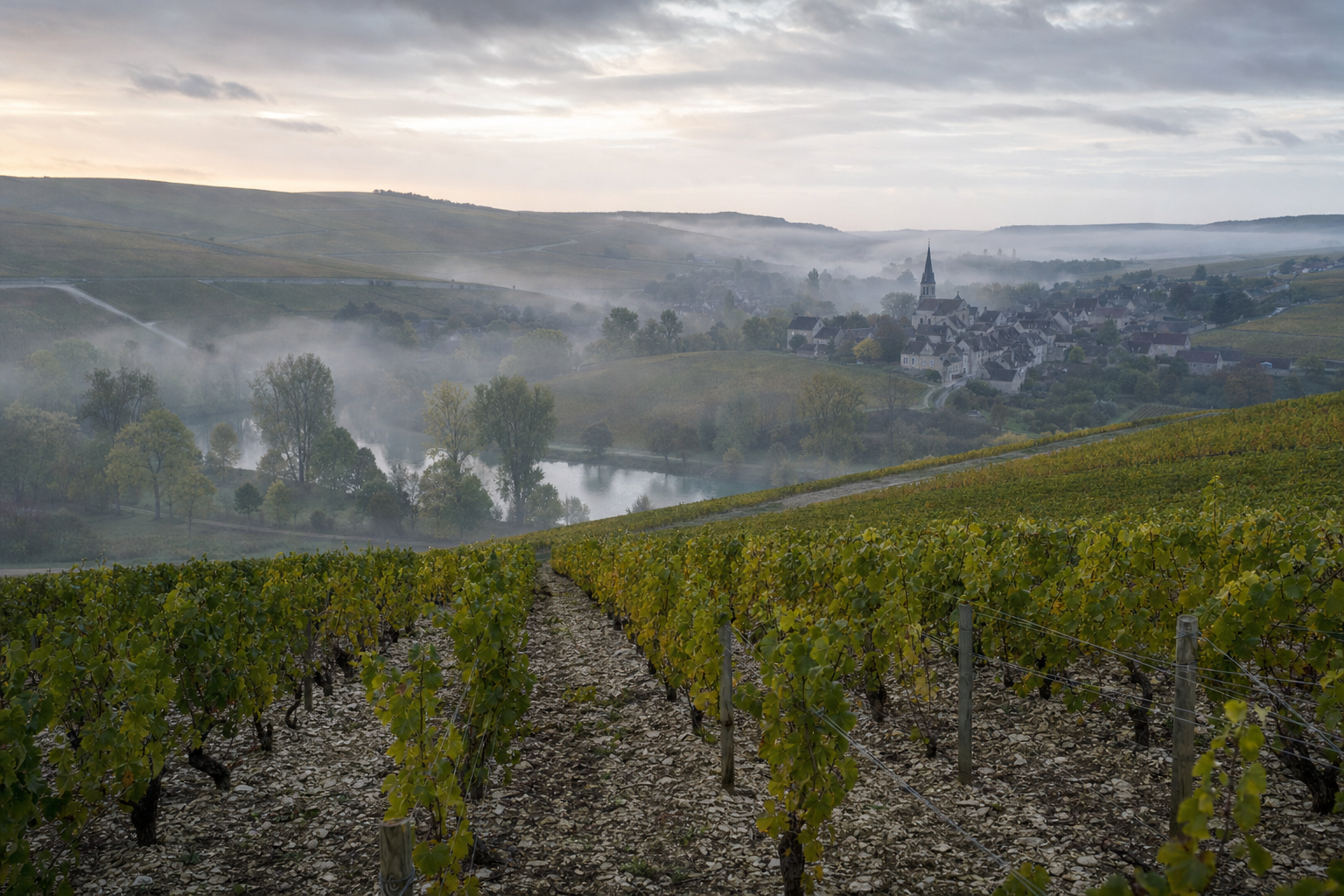
Kimmeridgian limestone, a small chalk-green river, and 47 named Climats spread across two banks. This is a working reference to every Premier Cru and Grand Cru vineyard in the appellation — soil, exposure, style, and who to buy.
The appellation at a glance
Four tiers, one river, one soil story
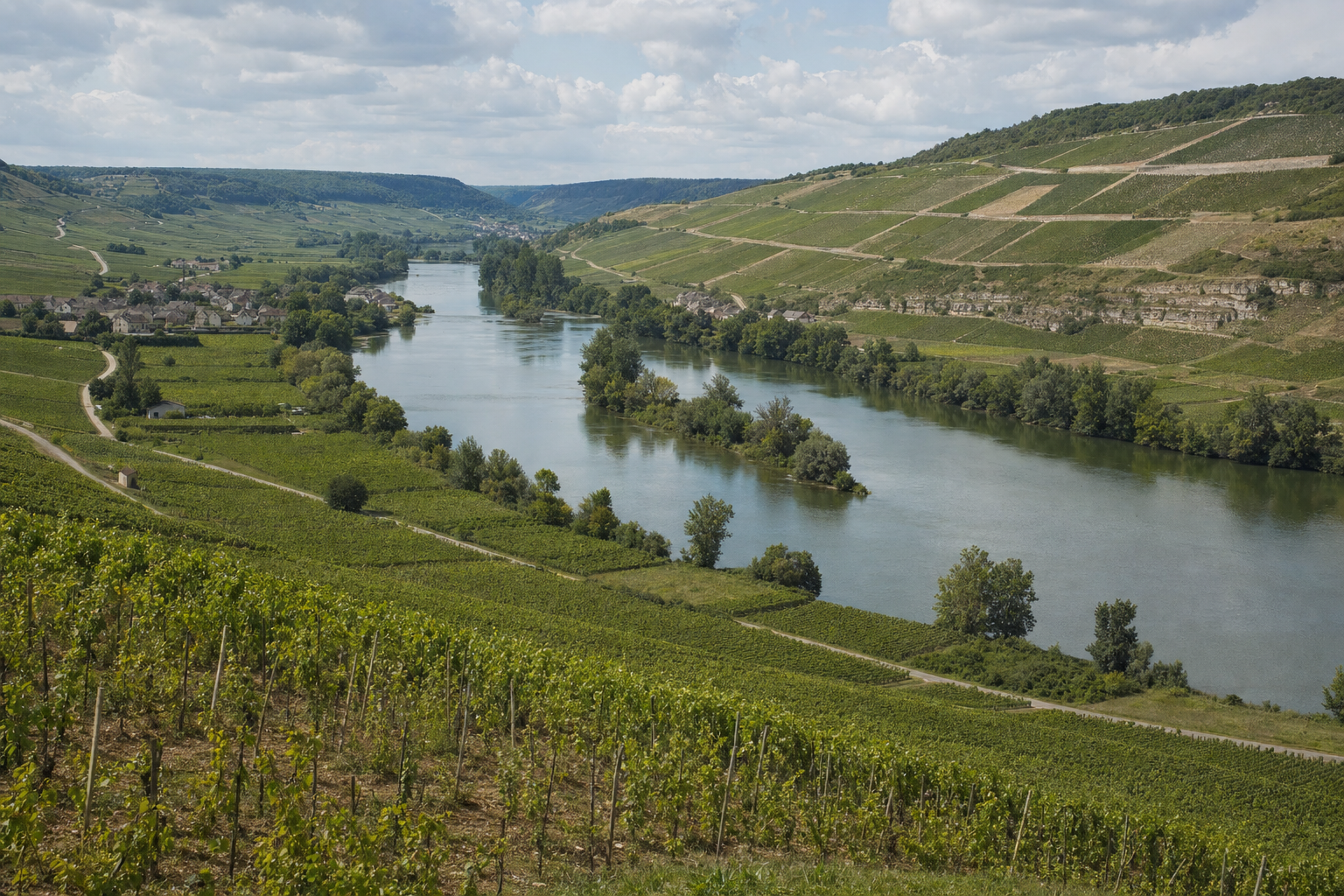
Chablis sits apart from the rest of Burgundy — an island of Chardonnay some 120km northwest of the Côte d'Or, built entirely on Kimmeridgian and Portlandian limestone laid down by a warm Jurassic sea. The appellation splits into four tiers, each keyed to where it sits relative to the Serein river and how close it is to that Kimmeridgian marl.
Illustrative schematic, not to scale. Click or focus a zone to jump to its section. Source: chablis-wines.com
1,286 ha · 20.5%
Portlandian limestone on the plateau and upper slopes. Lighter, citrus-driven, drink young. AOC since 1944.
Soil age: Portlandian / Tithonian
3,710 ha · 65%
The village-level backbone — Kimmeridgian marl on the mid-slopes and valley floor. AOC since 1938.
Soil age: Kimmeridgian
770 ha · 13%
40 Climats (79 lieux-dits), 17 of them flag-bearing, on the steeper hillsides of both banks. AOC since 1967.
16 Climats right bank · 24 Climats left bank
99 ha · 1.5%
Seven Climats on one southwest-facing hillside, right bank only, above the village. AOC since 1938.
Bougros → Preuses → Vaudésir → Grenouilles → Valmur → Les Clos → Blanchot
Figures: Chablis in a few figures, chablis-wines.com · The Climats of Chablis, chablis-wines.com
The foundational question
Petit Chablis vs Chablis: what's actually different?
Both wines are 100% Chardonnay from the same commune cluster around the Serein. The real difference is geological age — which rock the vines are rooted in, and where that rock sits on the slope.
Two Jurassic soils
Kimmeridgian vs Portlandian
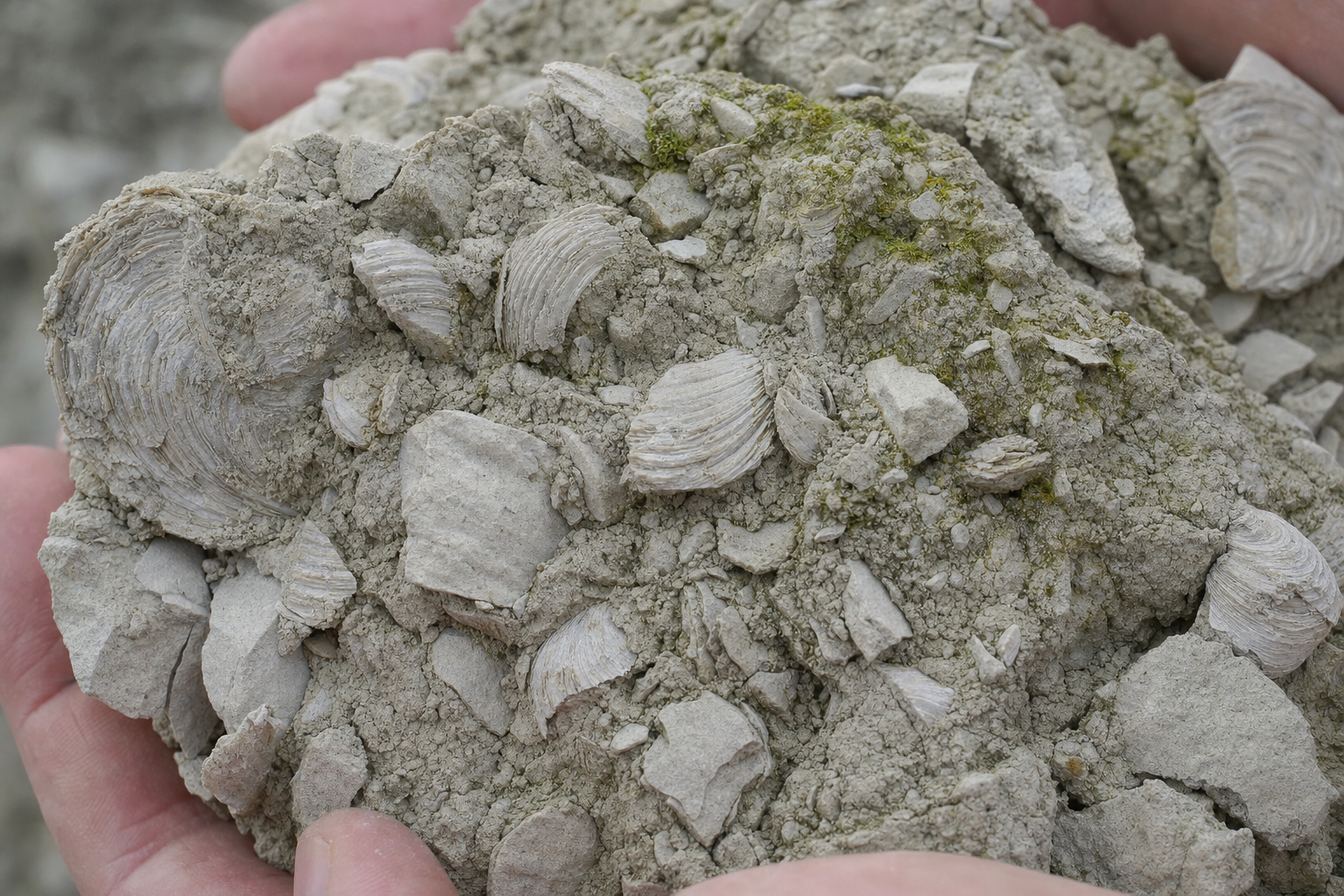
Chablis' hillsides — Chablis village, Premier Cru and Grand Cru alike — sit on Kimmeridgian marl: a soft, grey-blue clay-limestone laid down roughly 150 million years ago in a warm, shallow sea, still packed with the comma-shaped fossilised oyster shells of Exogyra virgula. Petit Chablis, by contrast, grows on Portlandian (Tithonian) limestone — younger, harder, formed as the sea rose further about 135–145 million years ago — found on the higher plateau and outer edges of the appellation.
As Jacques Fanet put it in Les terroirs du vin: "The vineyards of the Chablis region have just one religion: Kimmeridgian." Petit Chablis is, in effect, everything just outside that religion's reach.
| Petit Chablis | Chablis / 1er Cru / Grand Cru | |
|---|---|---|
| Geological age | Portlandian / Tithonian limestone | Kimmeridgian marl |
| Formed | ~135–145 million years ago, higher sea level, harder rock | ~150 million years ago, warm shallow sea, marl and clay |
| Signature fossil | Largely absent | Exogyra virgula — small oyster fossils |
| Where it sits | Plateau and outer, higher edges | Hillsides and valley floor, closer to the river |
| Typical style | Lighter, citrus-driven, best young | More depth, texture, minerality; ages further |
| Area (2023) | 1,286 ha (20.5% of production) | 3,710 ha village + 770 ha 1er Cru + 99 ha Grand Cru |
| AOC created | 1944 | 1938 (village & Grand Cru) · 1967 (1er Cru) |
Petit Chablis
The outer ring of the appellation. Bright, high-acid, unmistakably chalky, built for drinking within two or three years of the vintage — an honest, everyday expression of the same Chardonnay and the same climate, just a rung down in soil pedigree and typically a cooler, higher, breezier site.
Chablis (village)
Nearly two-thirds of everything the appellation makes. Fairly light hue of golden straw or greenish-gold; flint, green apple, lemon, undergrowth and mousseron mushroom on the nose, sometimes linden, mint, acacia or freshly-cut hay — the reference point for what "Chablis" tastes like before Premier or Grand Cru concentration enters the picture.
Sources: Wine Enthusiast, Petit Chablis · Chablis, chablis-wines.com · Special Soil, chablis-wines.com
99 hectares, seven names
The Grand Cru hillside
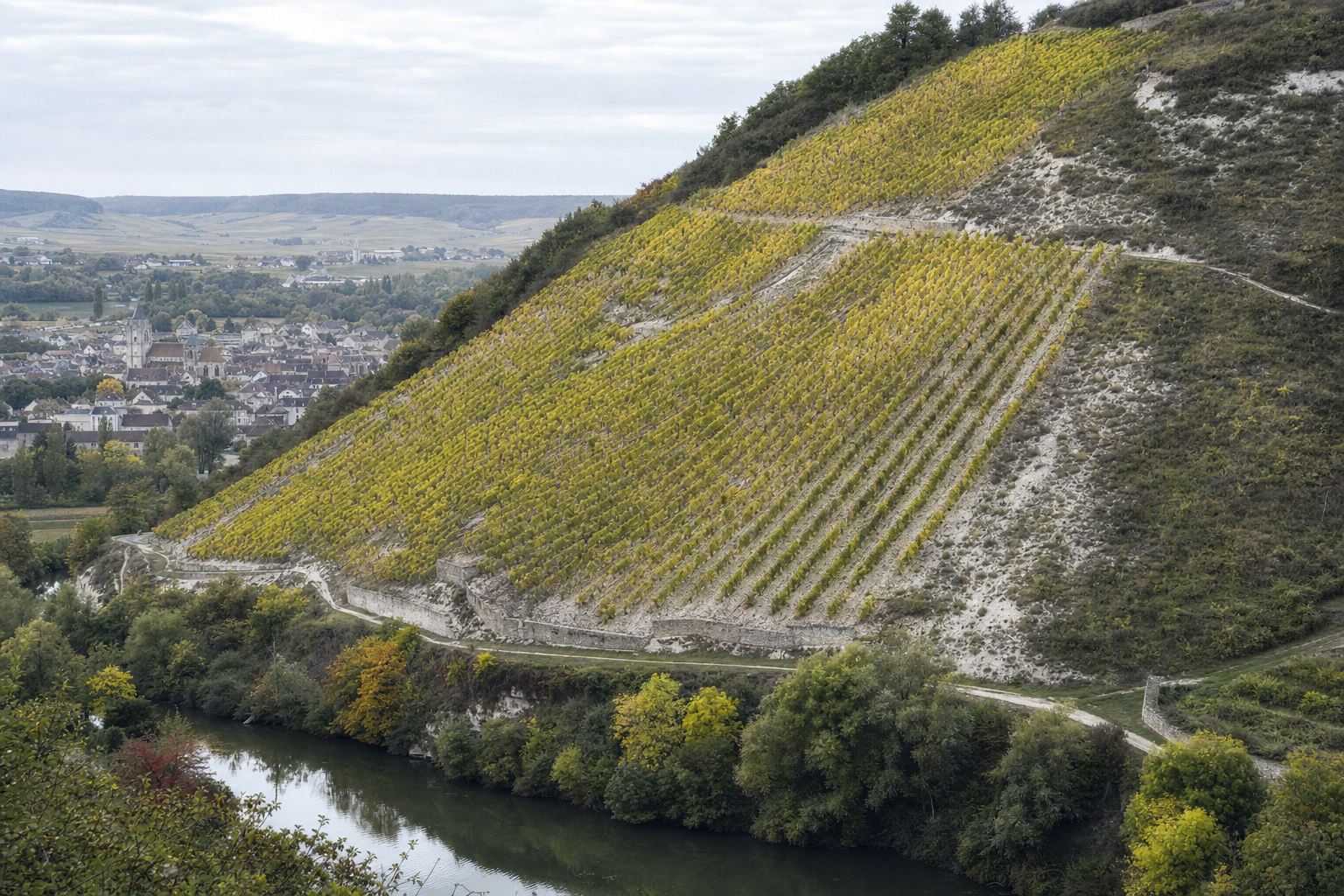
Every Grand Cru Climat sits on a single southwest-facing slope on the right bank of the Serein, above the village, spilling across the communes of Chablis, Fyé and Poinchy. Walk it west to east and you cross Bougros, Preuses, Vaudésir (home to the historic monopole La Moutonne), Grenouilles, Valmur, Les Clos and Blanchot.
Illustrative schematic, not to scale — relative size hints at each Climat's area. Click a Climat to jump to its profile.
770 hectares, both banks
Premier Cru: 40 Climats, 17 flags
Premier Cru covers 79 lieux-dits grouped into 40 nameable Climats — but only 17 are "flag-bearing," meaning they can appear alone on a label without a parent Climat's name attached. Ten of those flags fly on the left bank of the Serein; seven on the right, closer to the Grand Cru hillside.
Right bank · 7 flag Climats. Not to scale.
Left bank · 10 flag Climats. Not to scale.
Sources: Chablis Premier Cru, chablis-wines.com · The Climats of Chablis, chablis-wines.com — full official Climat page links appear on each card above.
Where to start
Names that show up again and again
Across 24 Climats of Grand and Premier Cru research, a small handful of houses keep reappearing as the benchmark — and a slightly different handful keep getting flagged as the ones to watch.
The reference houses
Raveneau & Dauvissat
Domaine François Raveneau and Vincent Dauvissat are the two names Chablis measures itself against — the benchmark across Valmur, Les Clos, Blanchot and Montée de Tonnerre (Raveneau) and Preuses, Les Clos and Vaillons (Dauvissat). Tiny production, long waitlists, built to age.
The widest lens
William Fèvre
The largest Premier and Grand Cru landholder in the appellation, and a benchmark on Bougros, Fourchaume, Montmains and Beauroy alike — the single best way to compare multiple Climats side by side from one cellar.
One to watch
Domaine Pattes Loup (Thomas Pico)
Flagged repeatedly across Vaillons, Les Beauregards and the rare Côte de Jouan as one of the most exciting estates to emerge from Chablis in a generation — organic-leaning, precise, and increasingly hard to find.
See each Climat card above for its specific benchmark and one-to-watch producer, with sourced citations.