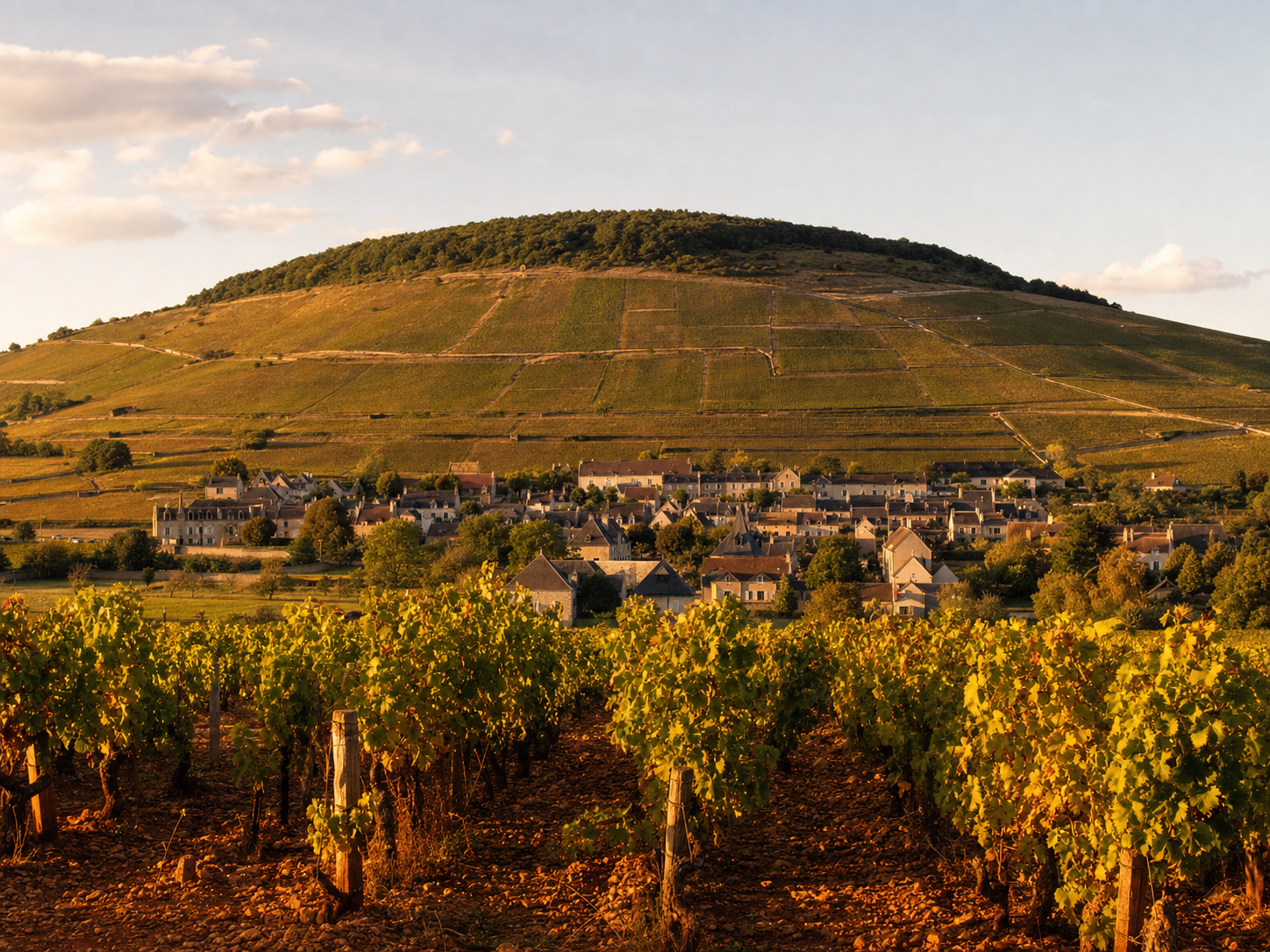
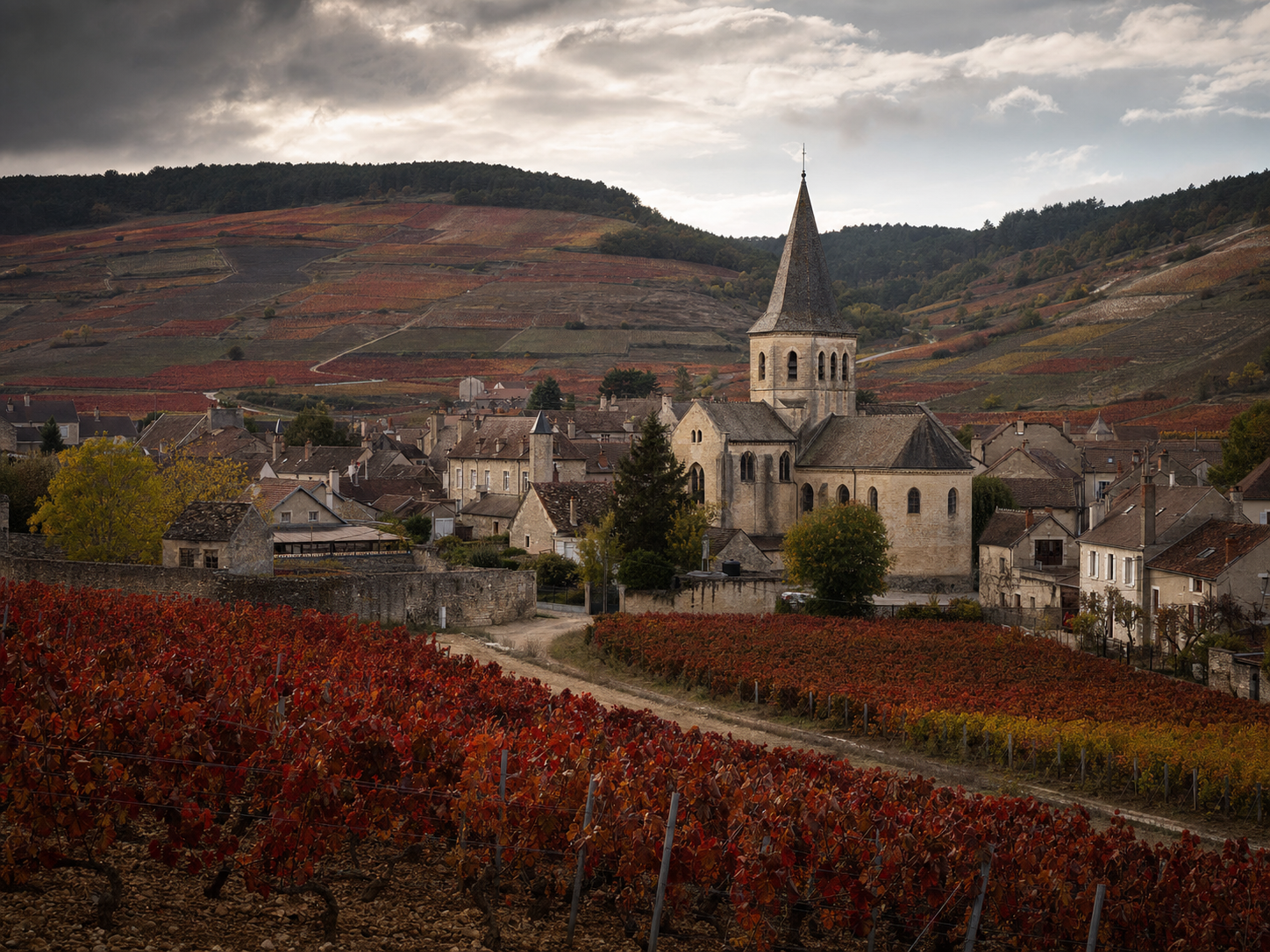
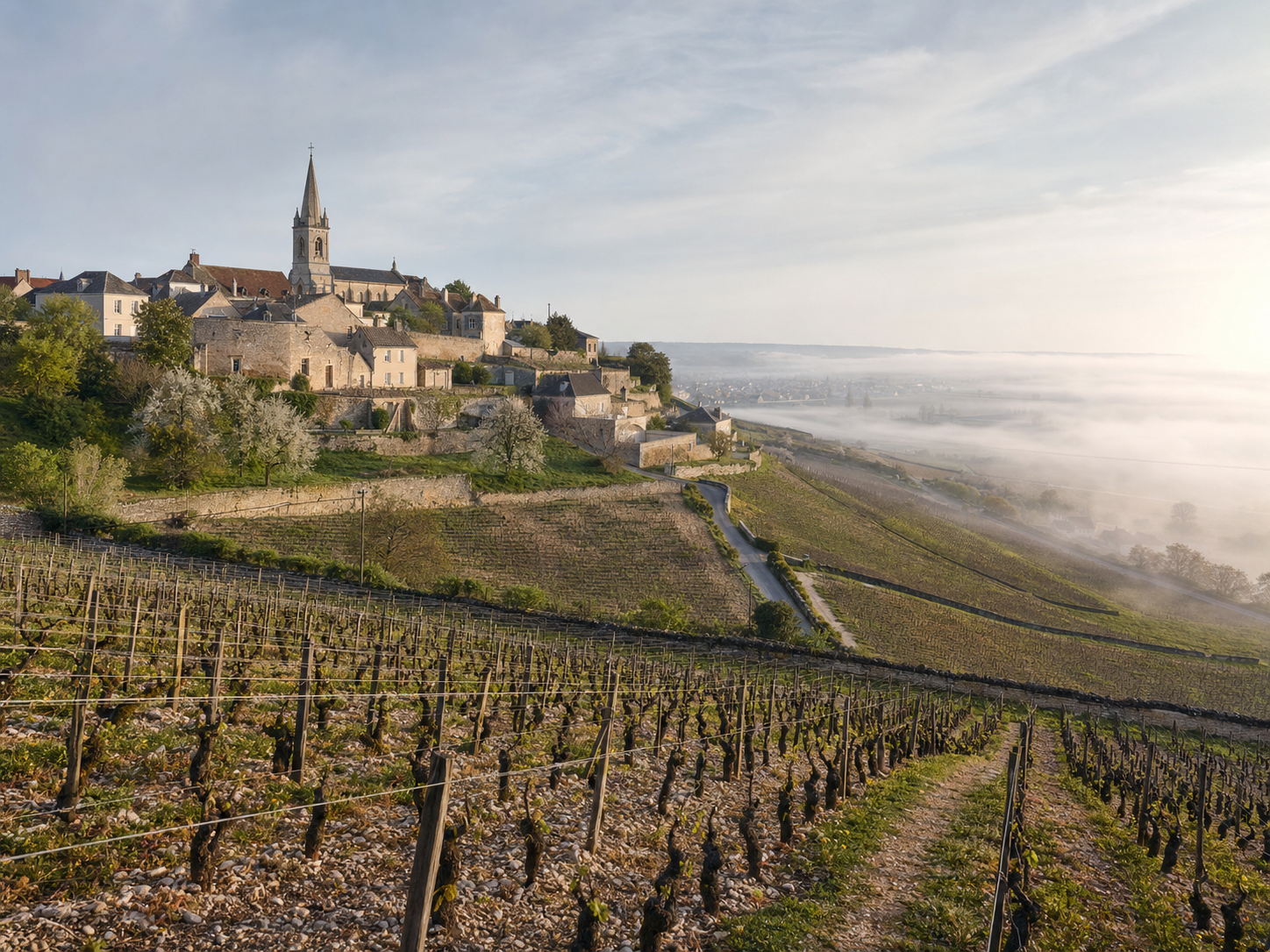
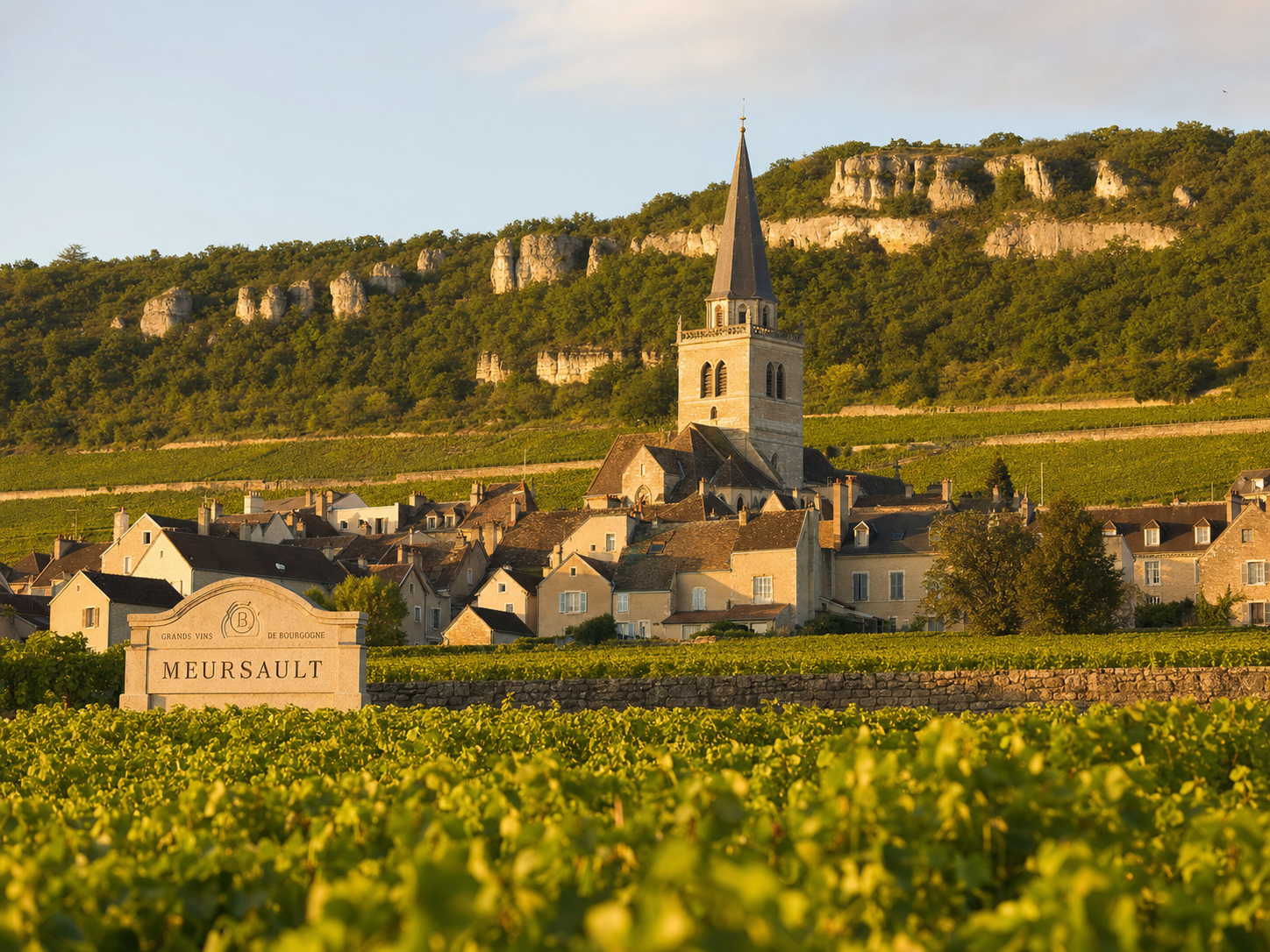
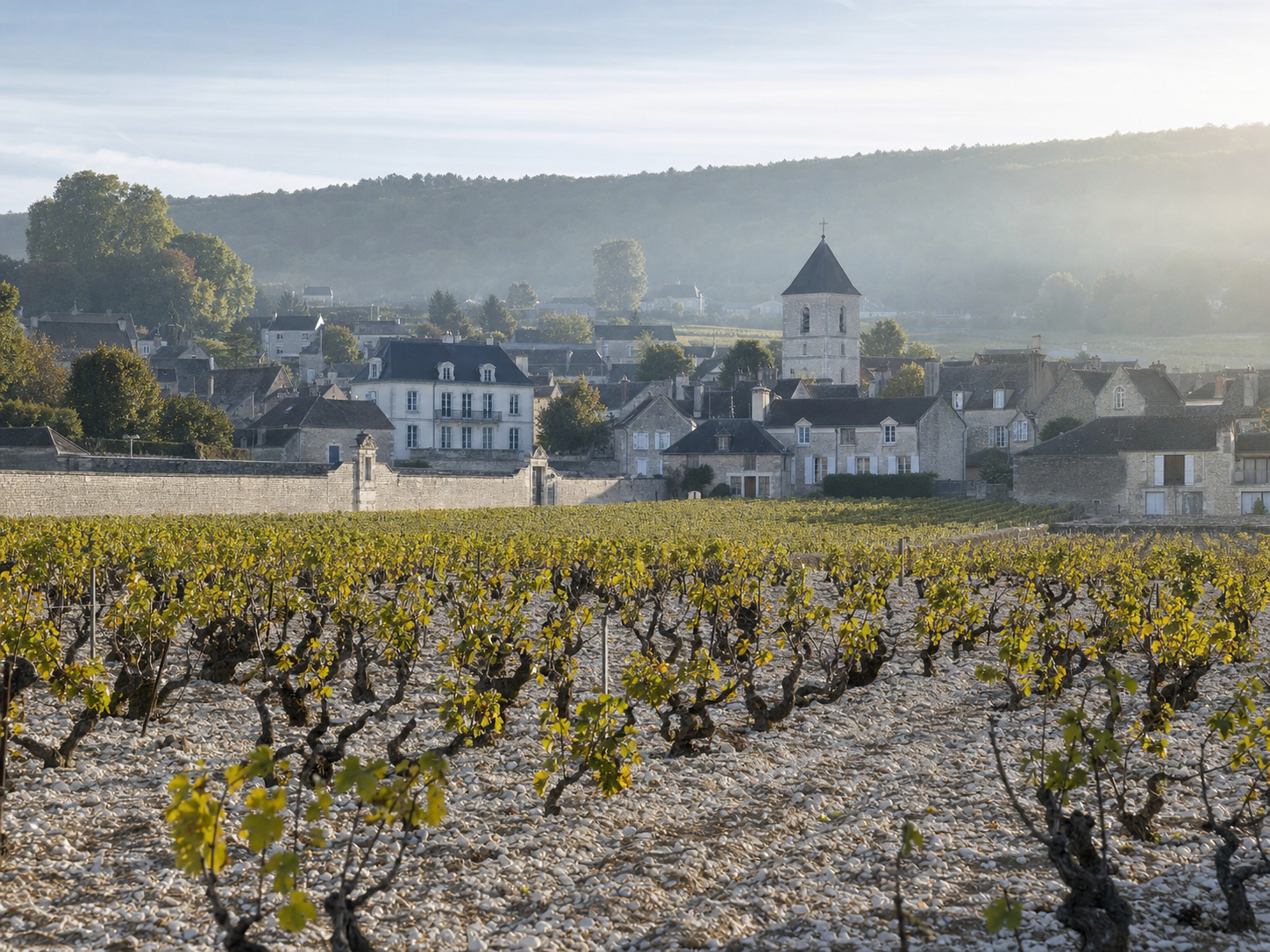
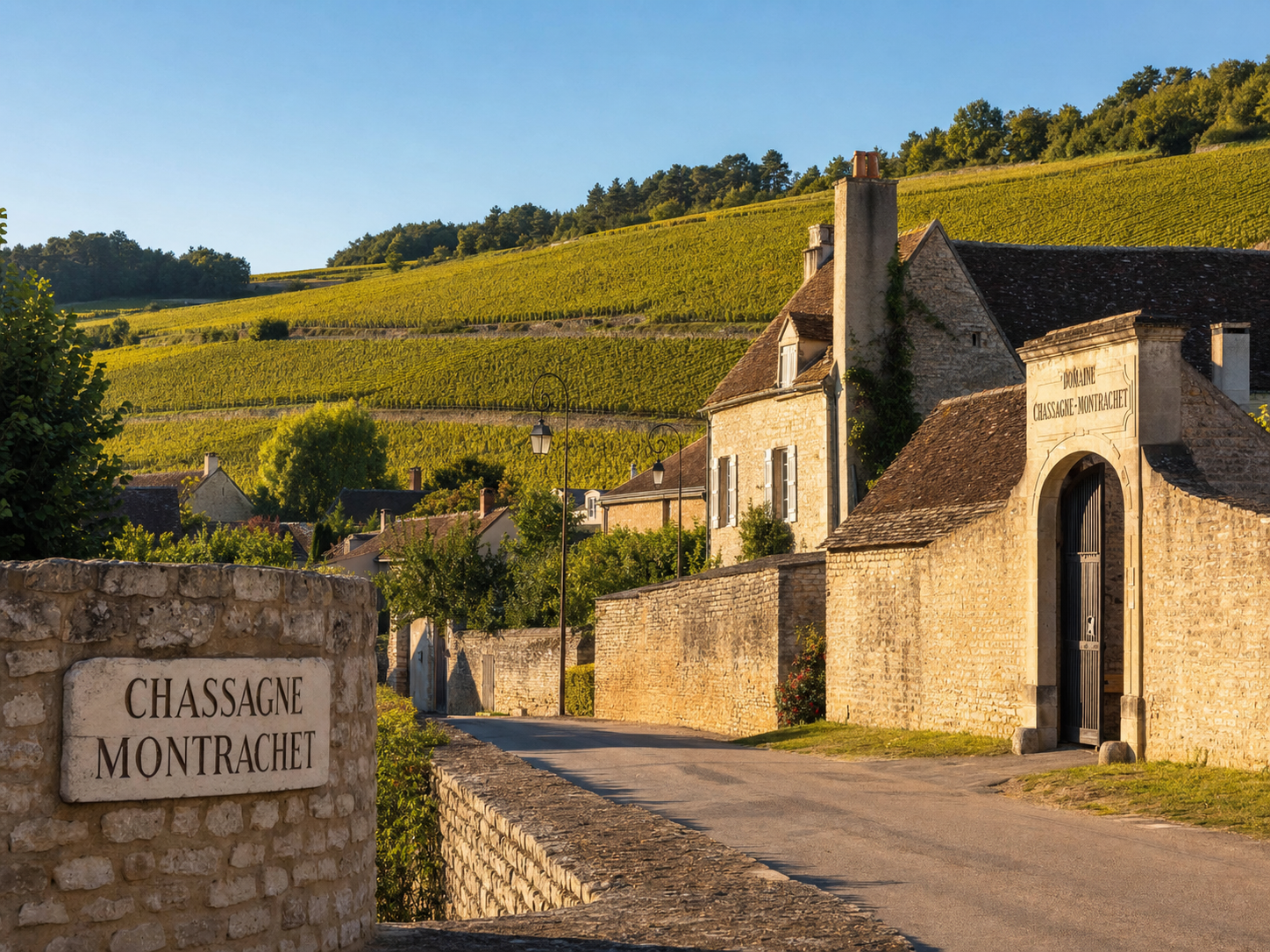
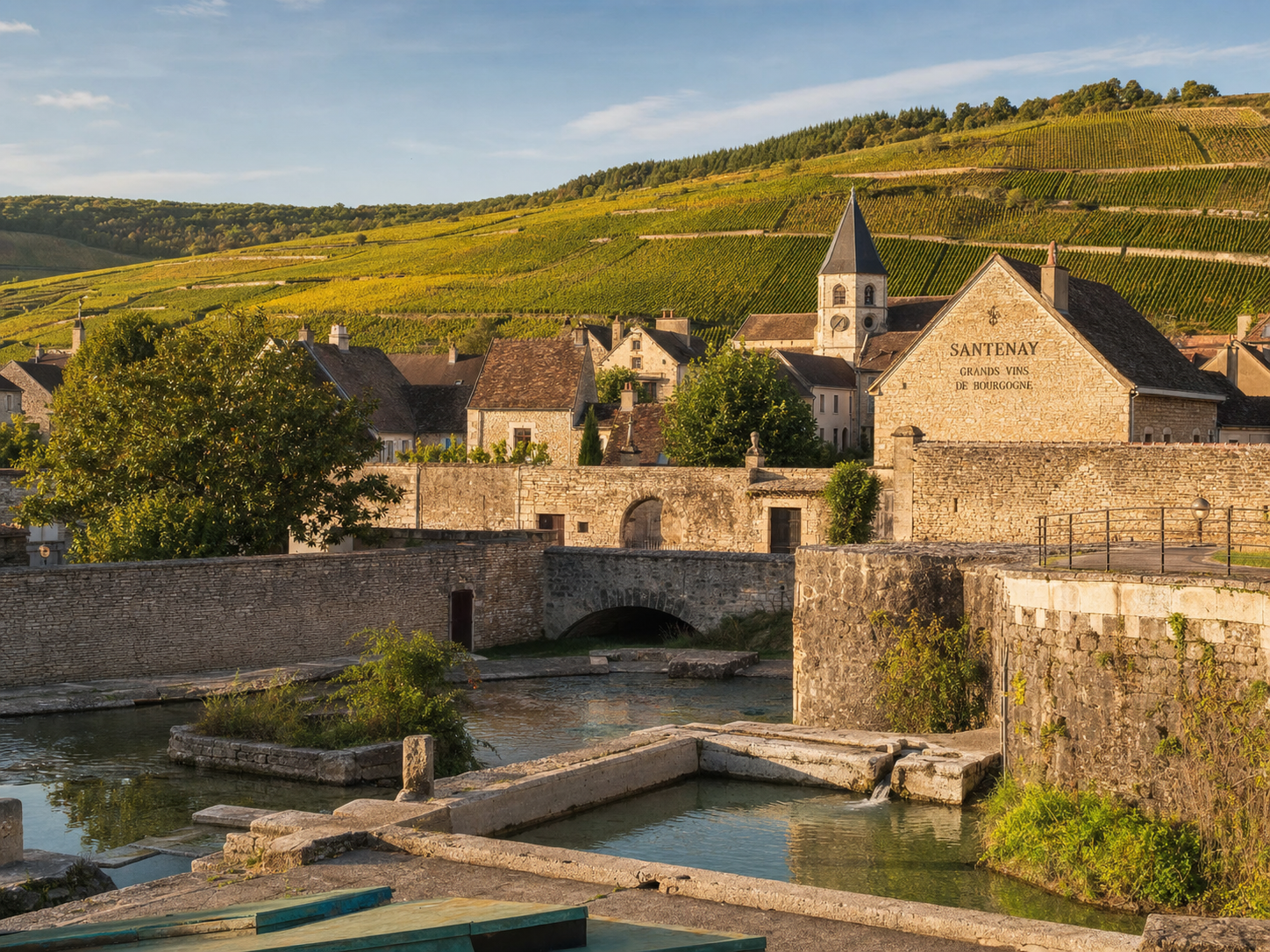
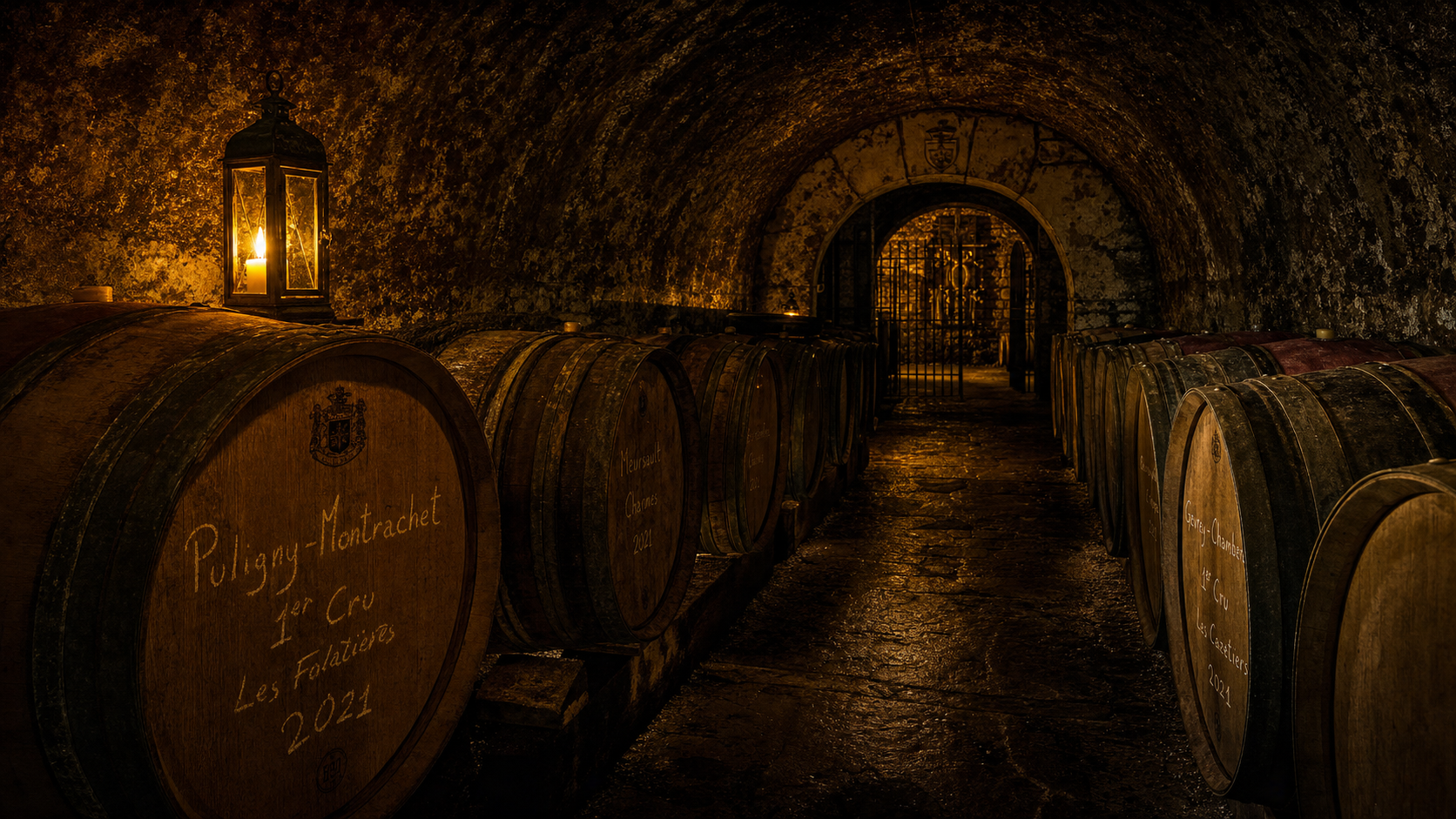
Golden vineyards of the Côte de Beaune at harvest, Burgundy

Burgundy · France · Chardonnay & Pinot Noir

La Côte de Beaune

Where Chardonnay reaches its highest expression.

A village-by-village guide to the appellations, soils, tasting differences, legendary estates, and under-the-radar producers of Burgundy's greatest white wine country — and its most elegant reds.

Explore the Region
30km Length of the Slope
8 Grand Cru Appellations
70% Chardonnay Planted
15 Villages Covered

The Lay of the Land

Fifteen Villages, One Golden Slope

Running south from Ladoix-Serrigny near the Hill of Corton to the ancient spa town of Santenay, the Côte de Beaune stretches across 30 kilometers of east- and southeast-facing limestone escarpment. Here, Chardonnay achieves a complexity and mineral precision unmatched anywhere on Earth — and Pinot Noir, particularly in Volnay and Pommard, reaches ethereal heights of elegance.

Ladoix-Serrigny vineyards at the northern gateway of the Côte de Beaune
North

Red & White

Ladoix-Serrigny

Northern gateway to the Hill of Corton. This compact appellation produces wines in the shadow of the great Corton Grand Cru — and its best parcels contribute to Corton and Corton-Charlemagne itself. An excellent-value entry point to Corton terroir.

Red & White
Explore Ladoix →
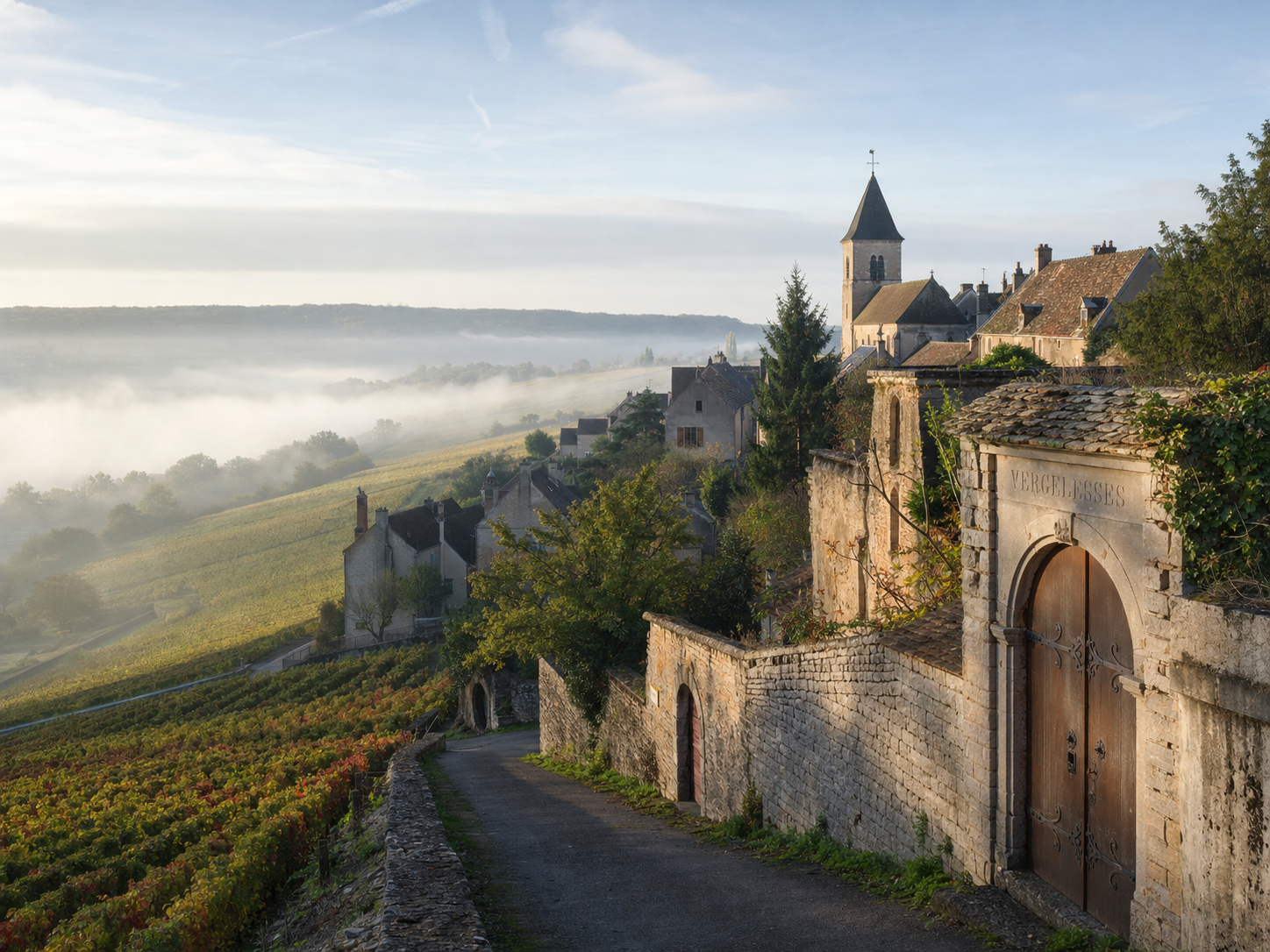
Pernand-Vergelesses village vineyards in the cool side valley
Cool Valley

Red & White

Pernand-Vergelesses

Cool valley wines rivaling Puligny in minerality. Tucked in a quiet side valley behind the Hill of Corton, Pernand produces wines of genuine freshness and tension — including a share of Corton-Charlemagne. The Île des Vergelesses Premier Cru is a criminally underrated red.

Red & White
Explore Pernand →
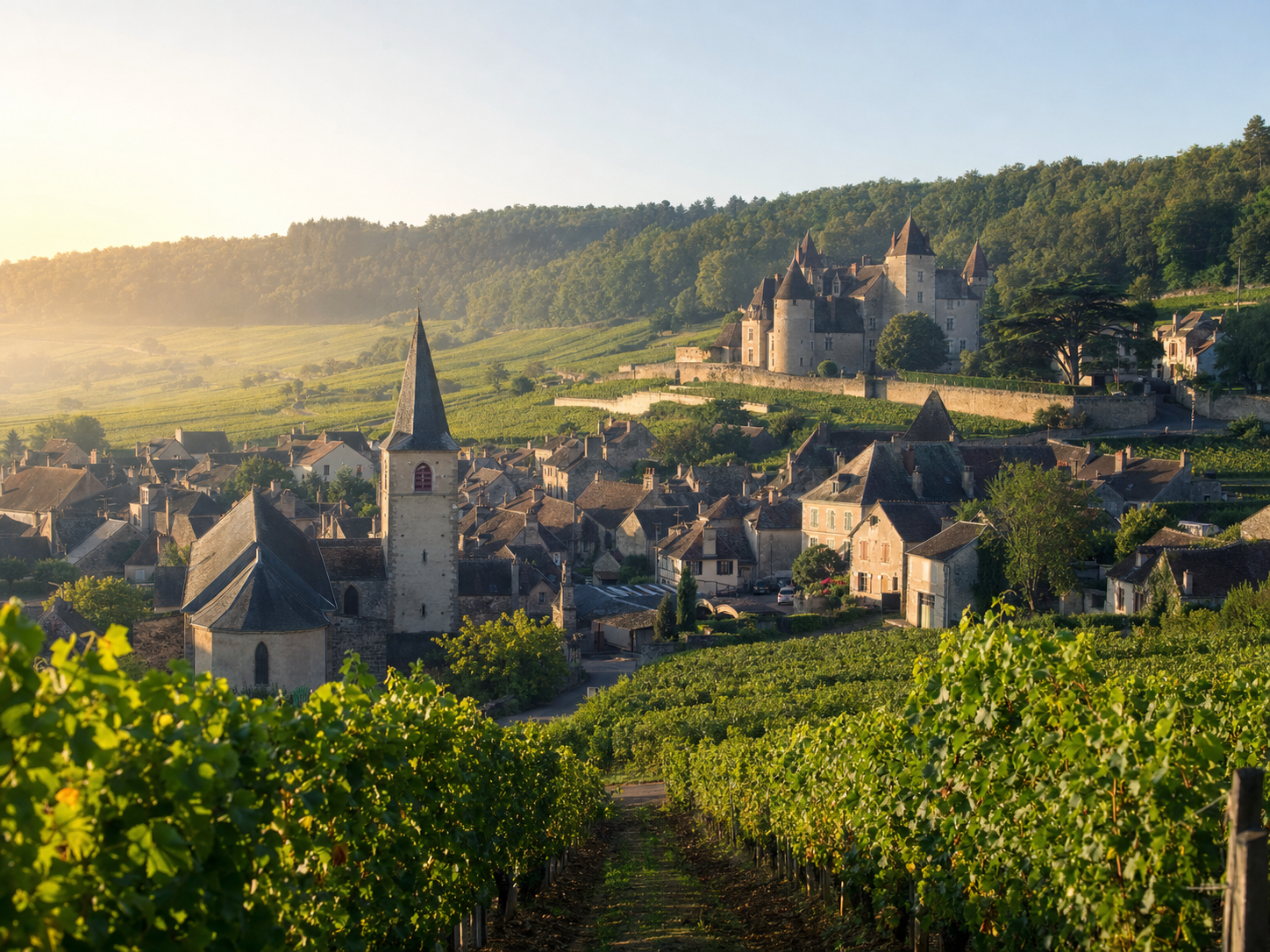
Savigny-lès-Beaune vineyards edged by the Forêt de Corton
Value

Red & White

Savigny-lès-Beaune

Fragrant, forest-edged Pinot of outstanding value. Two distinct terroir types — iron-rich soils near Pernand producing firm, structured reds; and sandier, lighter soils toward Beaune creating floral, approachable wines. Premier Crus like Aux Vergelesses rival much pricier villages.

Red & White 22 Premier Crus
Explore Savigny →
Flat Chorey-lès-Beaune vineyards in the plain
Plain

Red

Chorey-lès-Beaune

Flat terroir, delightful everyday Burgundy. Chorey sits on the flat plain east of the main N74 road — technically below the classification threshold for Premier Cru. But from estates like Tollot-Beaut, it delivers some of Burgundy's most pleasurable, affordable Pinot Noir.

Red only
Explore Chorey →
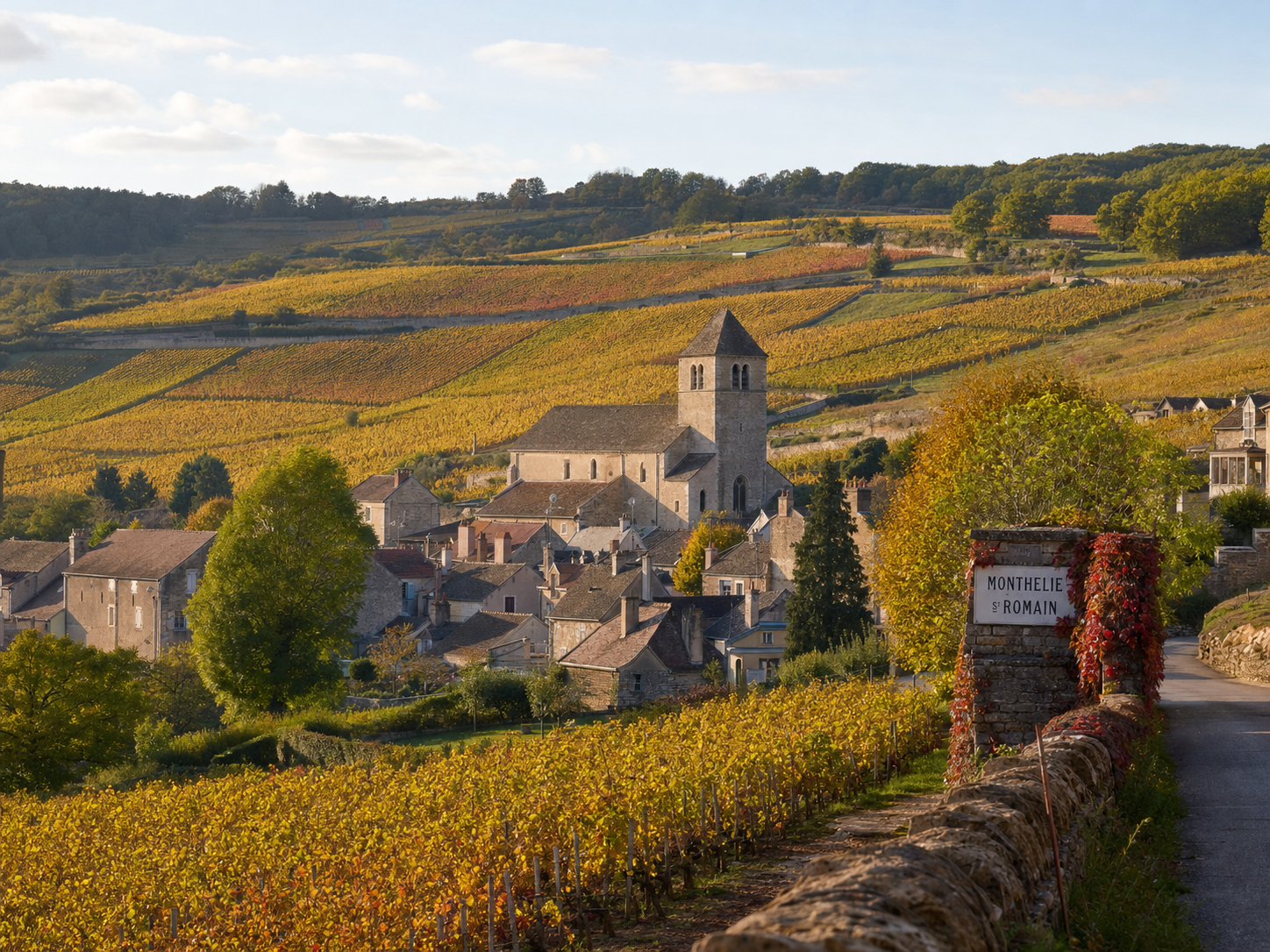
Monthélie village vineyards overlooking the valley
Value

Red & White

Monthélie

Volnay's overlooked neighbor at exceptional value. The vineyards of Monthélie share the same geology as their famous neighbor — yet wines here cost a fraction of Volnay prices. Sur la Velle Premier Cru, planted on the same hillside continuation, can rival Village Volnay from the best producers.

Red & White
Explore Monthélie →
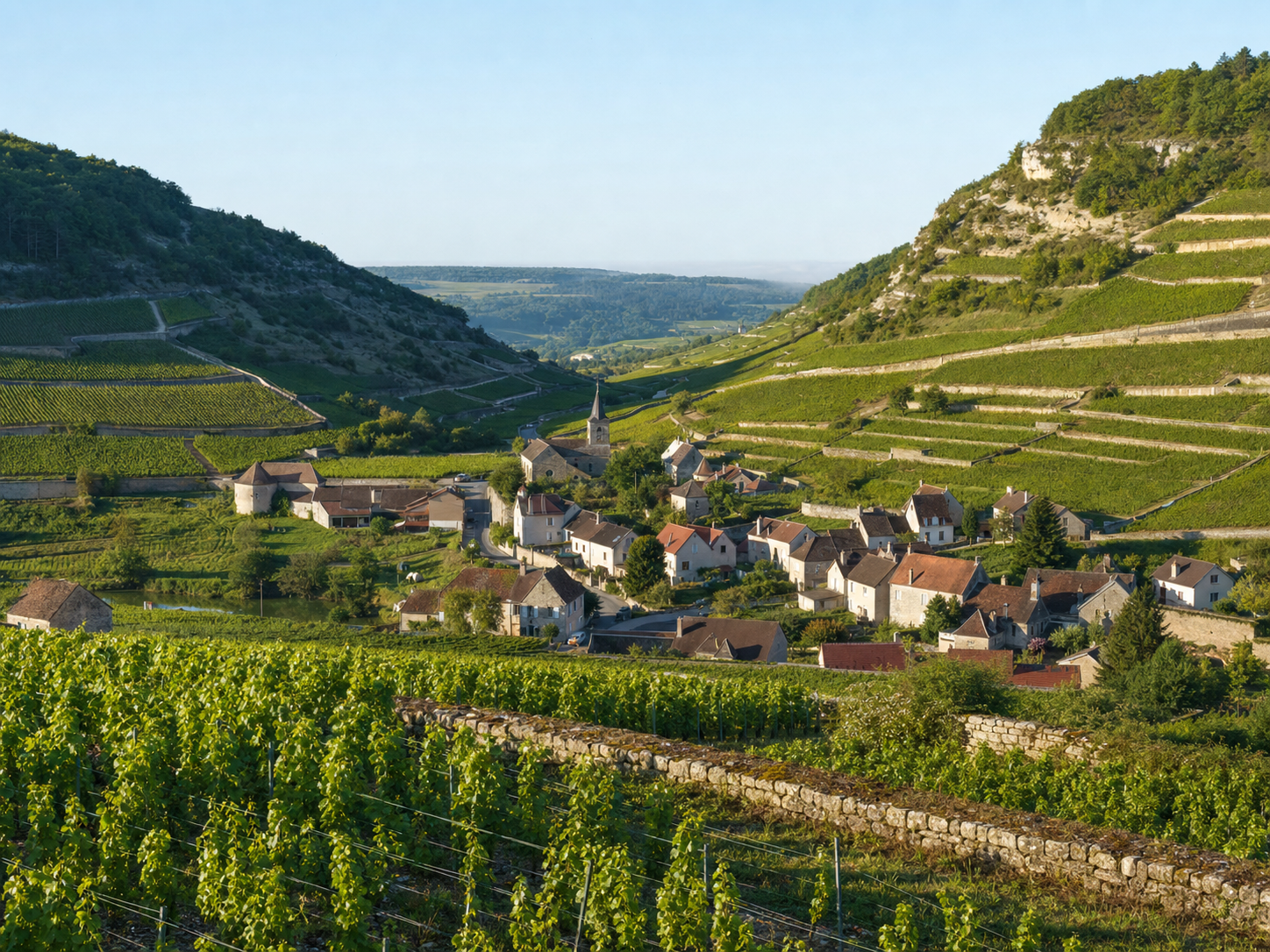
Auxey-Duresses hidden valley vineyards behind Meursault
Hidden

Red & White

Auxey-Duresses

Hidden valley gem behind Meursault. A quiet side valley that produced wines once sold as Meursault before appellation laws — and you can taste the relationship. Whites show real mineral tension and weight; reds have a fresh, spiced character. Prices remain low despite genuine quality.

Red & White
Explore Auxey-Duresses →
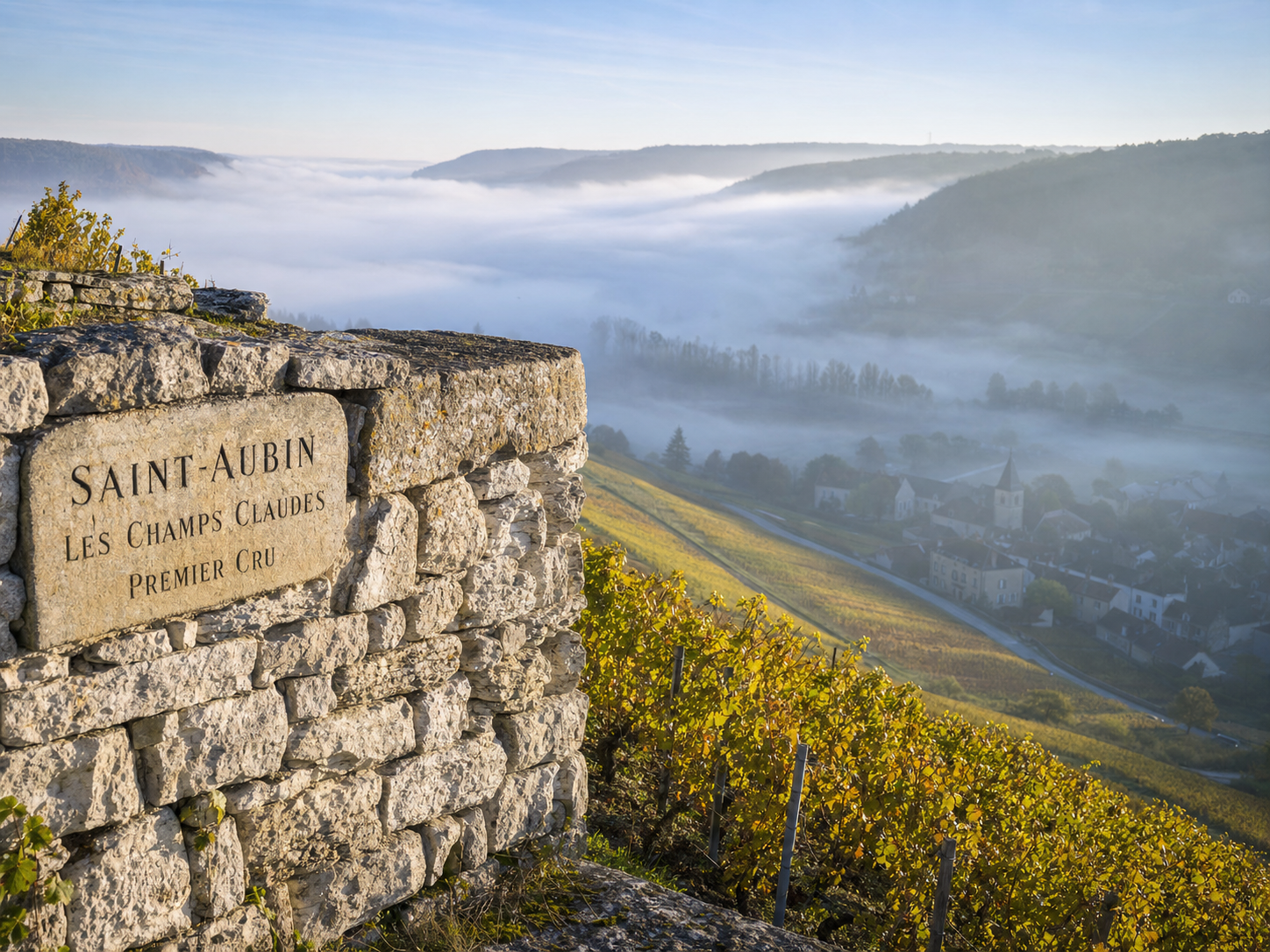
Saint-Aubin Premier Cru En Remilly above Chassagne
Rising Star

White & Red

Saint-Aubin

The rising star — Montrachet quality at a fraction of the price. Saint-Aubin's Premier Crus En Remilly and Les Murgers des Dents de Chien sit directly above the great Montrachet Grand Crus and share the same geology. From estates like Colin-Morey, these wines rival Village Puligny at a quarter of the price.

White & Red Excellent Value
Explore Saint-Aubin →
Ancient Santenay spa village vineyards at the southern end of the Côte
South

Red & White

Santenay

Ancient spa village at the southern end of the Côte. One of Burgundy's oldest appellations — the Romans enjoyed its thermal springs. Santenay reds have a firm, earthy, mineral character from pink granite and limestone soils. Premier Crus La Comme and Clos de Tavannes are exceptional and still undervalued.

Granite & Limestone Earthy · Mineral · Age-Worthy
Explore Santenay →

Geology & Terroir

Limestone, Clay & Iron — The Terroir Triad

The Côte de Beaune rests on a complex mosaic of Jurassic and early Cretaceous geology. The interplay of limestone types, clay content, and iron concentration across a 30-kilometer slope explains why Meursault tastes nothing like Puligny, and why Pommard bears no resemblance to the silky Volnay grown 500 meters away.

Kimmeridgian Marl

Meursault · Pommard

Deep clay-limestone of Late Jurassic origin — the foundation of Meursault's greatness. Rich in fossil oyster shells (terres blanches), this soil retains water through dry summers and provides a constant mineral supply to the vine. The result is white wines of extraordinary texture, weight, and roundness: toasted almond, hazelnut, butter, and a long mineral finish.

Wines it creates: Toasted almond, hazelnut, ripe apple, butter. Broad, nutty, voluptuous.

Oolitic Limestone

Volnay · Beaune

Stony, free-draining, chalky oolitic limestone — the key to Volnay's ethereal lightness. Formed from tiny spherical calcium carbonate grains (oolites), this soil forces the vine to work hard in poor, well-drained conditions. The result: Pinot Noir of extraordinary delicacy, high-toned floral aromatics, silken tannins, and that weightless texture that defines great Volnay.

Wines it creates: Violets, rose petal, wild raspberry. Silken, weightless, soaring.

Iron-Rich Clay

Pommard · Corton

Iron-heavy red clay — the secret behind Pommard's muscular structure and the striking power of Corton Grand Cru reds. High ferric oxide content is directly linked to the tannic grip, dark fruit concentration, and meaty, earthy complexity that defines these wines. In warm vintages, this terroir produces wines of breathtaking depth and longevity.

Wines it creates: Black cherry, leather, earth, iron. Firm, tannic, long-lived.

Hauterivian Limestone

Puligny-Montrachet · Chassagne-Montrachet

Hard, dense limestone from the Early Cretaceous era — the geological foundation of the world's greatest white wines. This compact, mineral-rich rock creates the extraordinary tension, flintiness, and laser-precise acidity that separates Puligny-Montrachet from every other white wine on Earth. The Montrachet Grand Cru sits at its finest expression.

Wines it creates: Green apple, lemongrass, flint, white blossom. Mineral, taut, precise.

Pernand Marl

Corton-Charlemagne

High-calcium limestone-clay mix unique to the upper flanks of the Hill of Corton. The southwestern exposure of Corton-Charlemagne combined with this calcareous marl produces Chardonnay of monumental weight, richness, and aging potential. Unlike Puligny's precision, Corton-Charlemagne brings power — hazelnut, dried apricot, mineral grip — that can age for thirty or more years.

Wines it creates: Hazelnut, dried apricot, spice, deep mineral. Powerful, age-worthy.

Galestro-Limestone

Meursault Perrières

Fractured, flinty limestone — poor and stony, with excellent drainage and deep root penetration. In Meursault Perrières, this soil type produces the most mineral, least opulent white wine in the village: tighter, more tense, and with greater aging potential than the richer Charmes or Genevrières. Many critics argue Perrières deserves Grand Cru status.

Wines it creates: Flint, white flower, fine mineral tension. The austere, age-worthy face of Meursault.

Soil Depth & Structure by Village

Corton-Charlemagne
Maximum Weight
Pommard
Maximum Power
Meursault
Rich & Voluptuous
Puligny-Montrachet
Most Precise
Volnay
Most Elegant
Chassagne-Montrachet
Opulent
Meursault Perrières
Taut & Mineral
Beaune
Versatile

Village Comparisons

The Spectrum of the Côte de Beaune

From the iron-fisted power of Corton to the weightless silk of Volnay; from the voluptuous warmth of Meursault to the razor-sharp precision of Puligny-Montrachet — the Côte de Beaune spans a wider stylistic range than any wine region of comparable size on Earth. Understanding these differences is the key to unlocking one of the world's greatest cellar investments.

Corton (Grand Cru Red)

$$$$

ColourDeep ruby, almost opaque in great vintages
NoseCherry, leather, earth, iron — the iron is unmistakable
PalateFull body, firm tannins, powerful structure, excellent concentration
FinishLong, mineral, iron-edged, earthy depth
Age15–25 years at Grand Cru level

"Corton is the last great red Grand Cru before the Côte de Beaune shifts to white — and it makes its presence felt with iron-fisted authority."

Volnay

$$$

ColourTranslucent ruby, brilliant and luminous
NoseViolets, wild raspberry, rose petal, spice
PalateSilken tannins, soaring acidity, ethereal lightness, profound depth
FinishGossamer, incredibly long, floral persistence
Age8–20 years at Premier Cru level

"Volnay does something physically impossible: profound complexity with the weight of mist. Clos des Ducs is Burgundy's most elegant wine."

Pommard

$$$

ColourDeep, dense ruby with purple youth
NoseBlack cherry, plum, leather, truffle, earthy depth
PalateFull body, powerful tannins, firm structure, rich fruit concentration
FinishLong, chewy, earthy, iron-tinged
Age10–15 years at Premier Cru level

"Pommard is the anti-Volnay — built for power, demanding patience. Les Rugiens at ten years is one of Burgundy's most satisfying bottles."

Meursault

$$$

ColourDeep gold with green highlights
NoseToasted almond, hazelnut, ripe apple, butter, white peach
PalateBroad, rich, nutty, creamy — voluptuous texture and weight
FinishLong, warm, nutty with mineral backbone
Age5–15 years at Premier Cru level

"If Puligny is a scalpel, Meursault is a velvet cushion. Both are extraordinary — but Meursault will seduce you first."

Puligny-Montrachet

$$$$

ColourPale gold with brilliant, cool green tints
NoseGreen apple, lemongrass, flint, white blossom, subtle honey
PalateLaser-precise, mineral, driving acidity, extraordinary length
FinishExtraordinarily long, flinty, mineral persistence
Age8–20+ years at Grand Cru level

"Puligny is where white wine becomes architecture. Le Montrachet is the greatest building on Earth — and from Leflaive, it is a cathedral."

Chassagne-Montrachet

$$$

ColourWarm gold, deeper than Puligny
NoseHawthorn, toasted hazelnut, acacia honey, cream, ripe stone fruit
PalateOpulent, full-bodied, rich texture, excellent mineral depth
FinishLong, creamy, warm with fine mineral backbone
Age6–15 years at Premier Cru level

"Chassagne has the generosity that Puligny reserves. It gives itself more readily — and is all the more enjoyable for it."

"The great differentiator is not village — it is slope position, soil depth, and the winemaker's relationship with restraint."

— A guiding principle of the Côte de Beaune

The Legendary Estates

The Benchmarks of the Côte de Beaune

These are the domaines that define what Côte de Beaune Chardonnay and Pinot Noir can be — estates whose wines appear in auction rooms, on the world's finest restaurant lists, and in the cellars of collectors who understand that the greatest white wines are made here, and nowhere else.

Puligny-Montrachet

Domaine Leflaive

The White Wine Icon

The most iconic white wine domaine on Earth. Anne-Claude Leflaive converted the estate to biodynamics in 1997, and the results transformed Burgundy. Their Chevalier-Montrachet and Bâtard-Montrachet are the benchmarks for Chardonnay anywhere — wines of extraordinary mineral precision, aromatic complexity, and decade-long aging potential. The Village Puligny alone is worth the pilgrimage.

Biodynamic White Benchmark Allocation Only
Must Know: Chevalier-Montrachet, Bâtard-Montrachet, Clavoillon
Meursault

Domaine Coche-Dury

Perhaps the most sought-after white wines in the world. Jean-François Coche's wines have extraordinary tension and longevity — combining the richness of Meursault with a mineral precision that seems to defy the terroir. Their Corton-Charlemagne is one of Burgundy's holy grails. Even the Meursault Village commands three-figure prices. Raphael Coche now leads the estate with equal brilliance.

Most Sought-After Allocation Only
Must Know: Corton-Charlemagne, Meursault Perrières, Meursault Village
Meursault

Domaine des Comtes Lafon

The reference point for Meursault. Dominique Lafon's conversion to biodynamics in the 1990s produced wines of unparalleled purity and longevity. Their Meursault Perrières is widely argued to be a rival to the great Montrachets — and their Montrachet itself is among the finest three or four bottles of white wine produced anywhere. The Volnay Premier Crus are equally stunning.

Biodynamic Meursault Benchmark
Must Know: Meursault Perrières, Montrachet, Volnay Champans
Puligny-Montrachet

Domaine de la Romanée-Conti (Montrachet)

DRC Montrachet

DRC's tiny 0.68-hectare plot in Le Montrachet Grand Cru is perhaps the most coveted vineyard parcel on Earth. Each vintage — just 6,000–7,000 bottles — is released at prices exceeding five figures. The wine defies description: mineral precision, extraordinary depth, and a complexity that unfolds over decades. The reference for what white wine can aspire to be.

0.68ha Monopole Five-Figure Prices Biodynamic
Must Know: Montrachet Grand Cru (sole bottling)
Chassagne-Montrachet

Domaine Ramonet

The gold standard for Chassagne-Montrachet. Their Montrachet and Bâtard-Montrachet are monuments to Chardonnay — wines of exceptional concentration, extraordinary texture, and a complexity that builds over two decades. Old vines, minimal intervention, and an uncompromising commitment to terroir. Ramonet's Chassagne Premier Crus remain some of Burgundy's greatest values.

Chassagne Benchmark Old Vines
Must Know: Montrachet, Bâtard-Montrachet, Chassagne Ruchottes
Volnay

Domaine Marquis d'Angerville

The historic champion of Volnay. The d'Angerville family fought for estate bottling decades before other domaines, establishing a tradition of uncompromising quality. Their Clos des Ducs monopole — a walled 2.1-hectare Premier Cru — is Volnay's finest single expression: the most complete, complex, and age-worthy wine of the appellation. Guillaume d'Angerville continues the legacy with brilliance.

Volnay Benchmark Clos des Ducs Monopole Historic Estate
Must Know: Clos des Ducs, Champans, Taillepieds
Pommard

Domaine Comte Armand

Sole owner of Clos des Épeneaux — a walled 5.3-hectare monopole within Pommard Premier Cru. This is the benchmark for structured, age-worthy Pommard: dark fruit, leather, iron, truffle, and a tannic architecture that demands fifteen years of patience. Benjamin Leroux led the estate to new heights; its current winemaker continues with equal dedication. The definitive statement of Pommard terroir.

Pommard Benchmark 5.3ha Monopole
Must Know: Clos des Épeneaux Monopole
Pernand-Vergelesses

Bonneau du Martray

The largest single owner of Corton-Charlemagne at 9.5 hectares. One of Burgundy's few single-vineyard estates — producing only two wines, both from the same Grand Cru hill. Their Corton-Charlemagne routinely rivals Le Montrachet in depth and complexity, at a fraction of the price. Acquired by John Kolasa in 2017 and converted to biodynamics, quality has reached new heights.

Largest Corton-Charlemagne Owner Biodynamic
Must Know: Corton-Charlemagne, Corton Grand Cru Rouge
Under the Radar

Under the Radar — Producers to Discover

Beyond the legendary names — whose allocations are controlled and whose prices have climbed beyond reach — a generation of talented producers is making wines of breathtaking quality from the same great terroirs. These are the domaines worth tracking now, before the international market catches up.

Rising Star
Meursault

Domaine Roulot

Jean-Marc Roulot is an actor turned winemaker whose wines have developed near-cult status among Burgundy obsessives. Exceptional tension and purity — his lieu-dit bottlings like Tessons and Luchets rival Premier Crus at a fraction of the price. The wines have a precision and freshness that separates them from the richer school of Meursault. Production is tiny and demand insatiable.

Why Now: Cult status ascending, still accessible pricing relative to peers, exceptional terroir expression across the entire range.
Cult Status Meursault Specialist
Hidden Gem
Savigny-lès-Beaune

Domaine Chandon de Briailles

Biodynamic estate run by the de Nicolaÿ sisters — one of Burgundy's best-kept secrets. Their Corton Bressandes, Île des Vergelesses, and Pernand-Vergelesses wines are breathtaking in quality and criminally underpriced. The style is light-handed, floral, and precise — a world away from the heavy-handed Corton that disappoints. This is the estate that proves the Hill of Corton can produce delicate wine.

Why Now: Biodynamic quality, internationally undervalued, exceptional Corton from a light-touch approach rarely seen.
Biodynamic Exceptional Value
To Watch
Saint-Aubin / Chassagne

Domaine Pierre-Yves Colin-Morey

Pierre-Yves broke off from Marc Colin to craft some of Burgundy's most mineral, precise whites from Saint-Aubin and Chassagne Premier Crus. His Saint-Aubin En Remilly sits directly above the Montrachet Grand Cru and rivals village Puligny at a quarter of the price. His Chassagne Premier Crus are equally brilliant — reductive, tense, built to age. The most exciting young domaine in the southern Côte de Beaune.

Why Now: Exceptional Saint-Aubin and Chassagne, mineral precision at outstanding prices, recognition growing rapidly.
Montrachet Terroir Outstanding Value
Best Value
Savigny-lès-Beaune

Domaine Simon Bize

Their Aux Vergelesses Premier Cru — often called the greatest $50 Burgundy you can find — is a benchmark for the appellation. Undervalued, fragrant, and age-worthy: red cherry, forest floor, floral lift, and a silky texture that over-delivers at every price point. Now led by the next generation with the same commitment to gentle, precise winemaking. The value hunter's first stop.

Why Now: Still accessible pricing, Aux Vergelesses is genuinely one of Burgundy's great value bottles, excellent cellar candidate.
Best Value Under $60
Hidden Gem
Maranges / Chassagne

Domaine Bachelet-Monnot

A small domaine producing wines of surprising finesse and precision in the underappreciated Maranges appellation and Chassagne. Marc Bachelet brings a minimalist approach — low intervention, minimal new oak — that allows the granite and limestone of Maranges to speak clearly. His Chassagne Premier Crus punch well above their price point and his Maranges La Fussière is remarkable for the appellation.

Why Now: Maranges remains deeply undervalued, Chassagne quality at below-market prices, excellent winemaking.
Maranges Specialist Exceptional Value
Monopole Gem
Puligny-Montrachet

Domaine Henri Boillot

Henri focuses exclusively on white wines, producing small quantities of Premier Cru Puligny from some of the appellation's best sites. His Clos de la Mouchère monopole — a 3.5-hectare Premier Cru planted entirely by his family — is outstanding: flinty, precise, and built for a decade of aging. Less famous than Leflaive or Sauzet, it delivers comparable terroir expression at meaningfully lower prices.

Why Now: Monopole Premier Cru, white-wine specialist, Puligny quality at below-benchmark prices.
Monopole Cru Puligny Specialist

The Value Hunter's Framework

Buy Saint-Aubin

Premier Crus En Remilly and Les Murgers des Dents de Chien share the Montrachet geological formation — at a fraction of Puligny prices. The most compelling value in the Côte de Beaune.

Explore Savigny

Twenty-two Premier Crus, two distinct terroir types, and prices that remain in line with Village Burgundy from lesser appellations. Aux Vergelesses is one of Burgundy's greatest buys.

Trust Chassagne Reds

While the world chases Chassagne whites, the reds — from the same great slopes — sell at Village Burgundy prices. Morgeot and La Boudriotte reds are extraordinary values.

Seek Monthélie & Auxey

These two overlooked villages share the geology of Volnay and Meursault respectively. From the right producer, they offer the same experience at a quarter of the price.

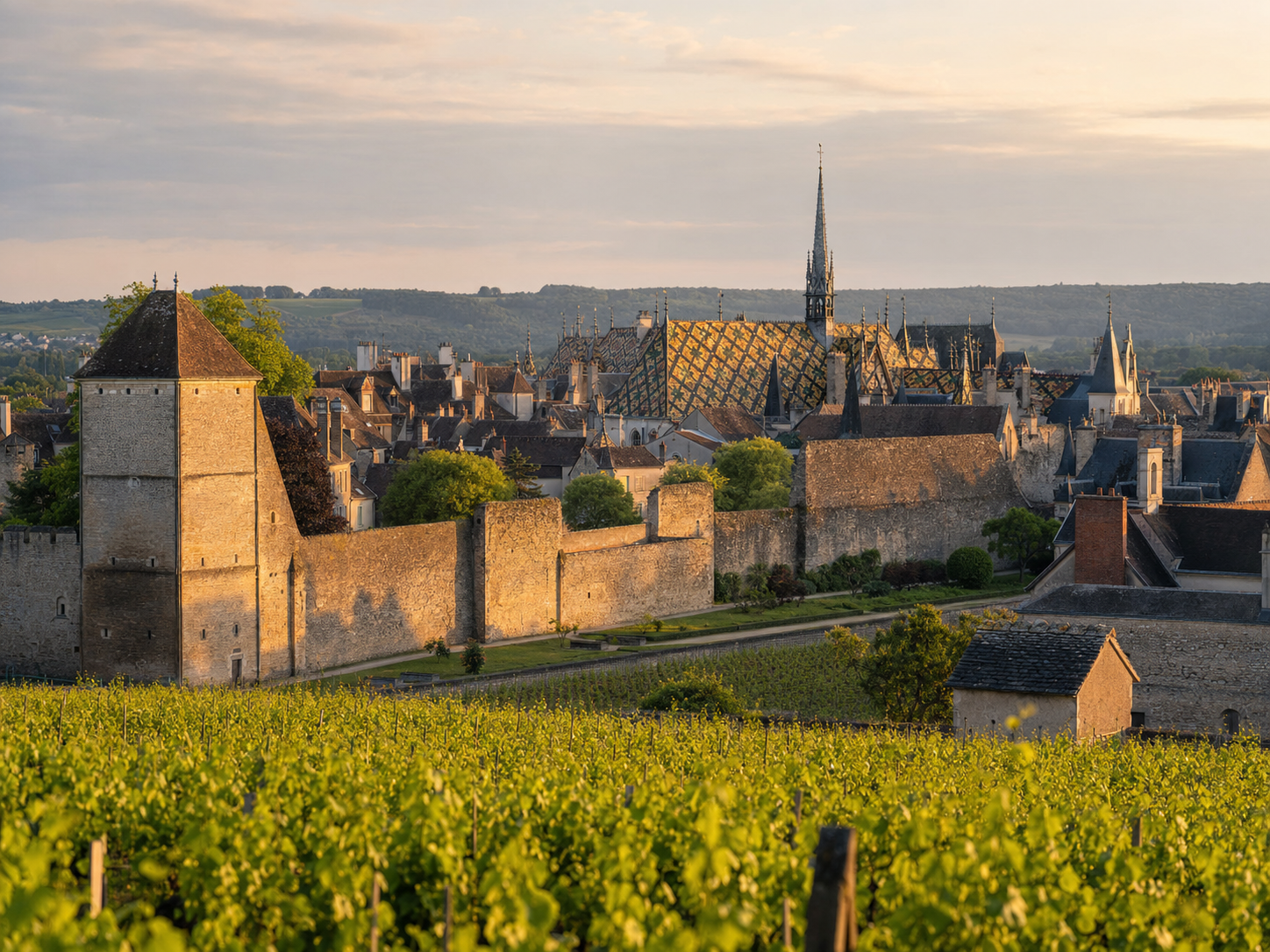
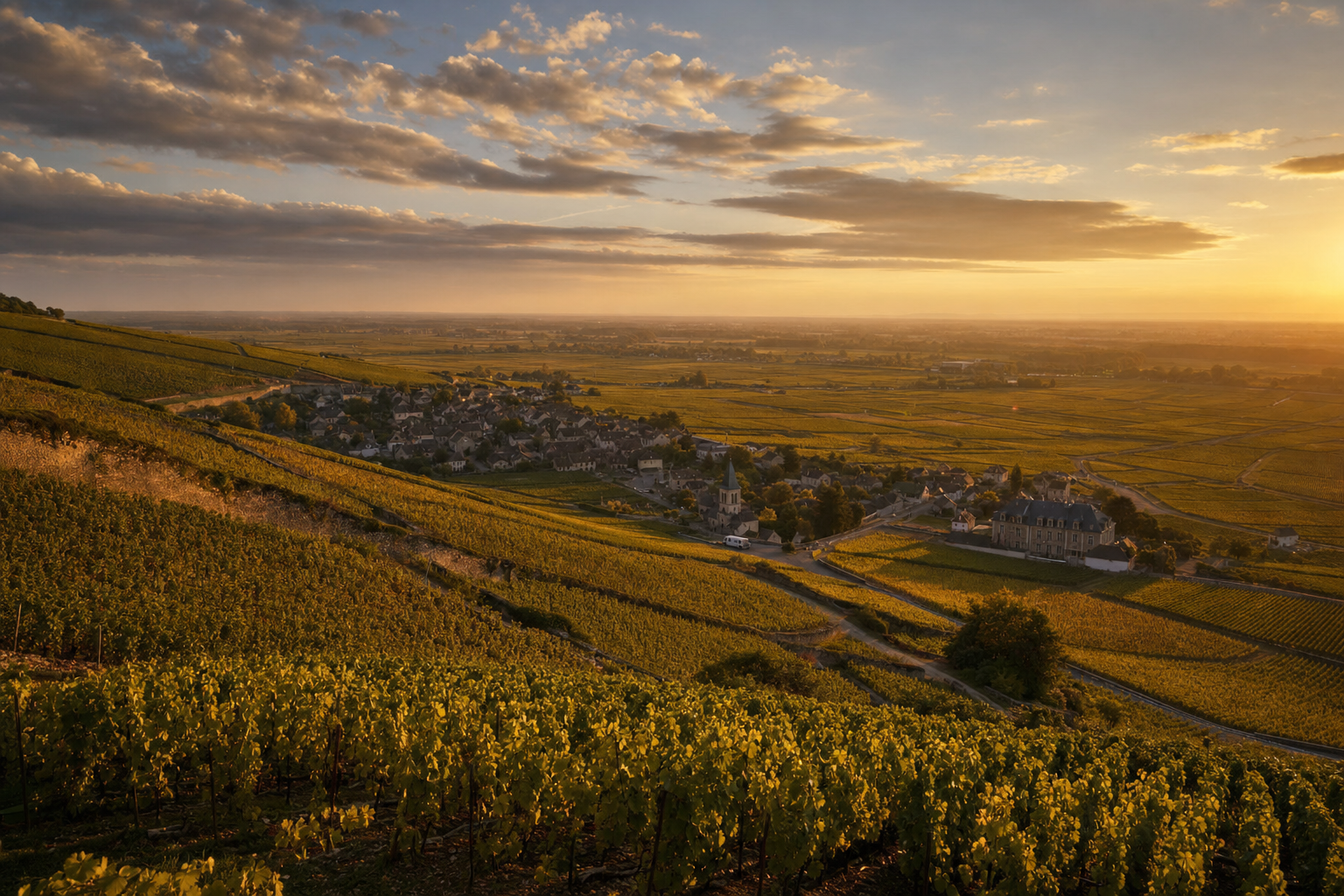
Harvest season in the white wine vineyards of the Côte de Beaune

"The Côte de Beaune does not merely make white wine — it defines what white wine can be."

— Jancis Robinson, MW