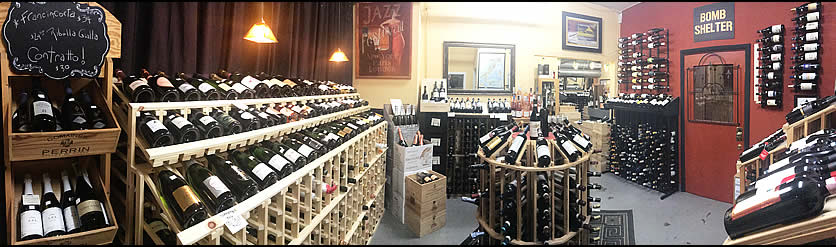
Renegade Wines
2022 Zorah Karasi (Armenia, Vayots Dzor)

 The vineyards of Zorah are situated 4500-6000 ft above sea level at the foothills of Mount Ararat. Working with native varieties, the vines are planted on their own roots directly into the rocky soils which have never seen Phylloxera. The vine cuttings come from old abandoned vineyards of a nearby 13th century monastery. The high altitude, the poor soil, drastic temperature variations between day and night, and a harvest in late October all contribute to the creation of terroir-driven wines.

We received two exciting (and historic) wines from this Armenian winery today. 

The first:

2022 Zorah Karasi Areni ($55)
Aged in traditional buried clay amphorae, this 100% Areni Noir has a unique DNA profile that does not match any other grape varietal in the world. 
The wine begins with aromas of spiced red fruit, dark berries, and earth, followed by notes of wild red fruit, dried mountain herbs, black pepper, with a long mineral finish. Lots of energy here.

The second wine:

2021 Zorah Yeraz ($185)
An extremley rare wine from 100+ year old vines grown at nearly 6,000 foot elevation.

This is a breathtaking expression of ancient Armenian viticulture and one of the world's most distinctive red wines. Named "Yeraz," meaning "Dream" in Armenian, this remarkable wine represents the dream of reviving one of humanity's oldest winemaking civilizations while crafting a world-class wine that faithfully reflects its extraordinary origin.

The wine itself: The bouquet is remarkably refined and expressive, opening with aromas of crushed raspberry, wild cherry, rose petals, cedar, forest floor, black tea, dried herbs, and volcanic stone.
The palate is graceful, medium-bodied, and beautifully textured, offering red cherry, raspberry, pomegranate, warm spices, earthy minerals, and subtle cedar, framed by silky tannins and vibrant mountain acidity.
The exceptionally long finish reveals lingering mineral notes, delicate spice, and remarkable freshness.

Rather than power, Yeraz impresses with precision, purity, and finesse.
 

2024 Domaine H Vin de Savoie Chignin Rien à Perdre (France, Savoie, Vin de Savoie Chignin)

2024 Domaine H Vin de Savoie Chignin Rien à Perdre
(France, Savoie, Vin de Savoie Chignin)
$48

This cuvée (100% Mondeuse) takes its name from the expression ‘rien à perdre’—‘nothing to lose.’ It’s a concept he had in mind for years, reserving it for a wine close to his heart. While some wondered why he would embark on a new challenge after success in importing and restaurants, he saw it differently: with nothing to prove, he had everything to explore.

As for the wine: Deep ruby with a vivid violet edge. The nose is precise and aromatic: dark cherry, blackberry, dried violet, mountain herbs, and a pronounced crack of black pepper. The palate delivers fine tannins, bright alpine acidity, spiced dark fruit, and a piercing mineral finish with genuine length.


and in case you missed our first post about Domaine H, here is his origin story:


Perched on the steep slopes of Chignin, Domaine H is the new project by Sukhwan Ha, a Korean-born, sommelier-turned-vigneron who transitioned from a distinguished front-of-house career to winemaking in 2023. He tends old vines across Chignin’s high terraces and works parcel by parcel to preserve freshness and minerality.
 
Before becoming a vigneron, Sukhwan made his name in Lyon — notably as chef-sommelier and owner of Le Passe-Temps, one of the very first restaurants in the region to earn a Michelin star.

When the restaurant was forced to shutter its doors during COVID, Sukhwan used the time to visit vineyards, which led him to pursue winemaking training in Beaune. He later completed an internship with Emmanuel Overnoy.

At Domaine H, the focus remains on varieties that suit Chignin’s steep, high-altitude calcareous slopes. Sukhwan’s parcels sit between roughly 400–500m; the vines began an organic transition in 2023 while testing biodynamic treatments on select plots. Sukhwan’s first vintage was only in 2023; his wines see élevage in used barrels and demi-muids sourced from producers such as Pascal Côtat.


We look forward to many more wines from the talented producer.